Psilocybin builds tolerance fast. Strangely fast. Take a dose today, reach for the same amount tomorrow, and the second one barely shows up. Try it a third day running and you are mostly burning through material for nothing at all. What makes that genuinely odd is the clock it runs on. Most drugs that build tolerance need weeks of steady use to get there, sometimes months. Psilocybin manages it overnight, in a single turn of the calendar, and that one quirk ends up shaping how the substance gets studied, how therapists build their protocols around it, and how it behaves for anyone who takes it. That is what this piece is about.
So here is the plan. We will look at the biology sitting underneath the effect, the actual cellular machinery that makes the second dose fall flat. We will work out what happens when psilocybin meets other substances, because the way it does and does not interact with them is one of the clearest windows into how the whole mechanism operates. And we will follow why this overnight tolerance matters a great deal more than it first appears, reaching into clinical design, into the microdosing conversation, even into why the substance carries the addiction profile it does. One thing to be clear about from the start. This is an explainer about pharmacology, not a how-to. Wherever the science brushes up against patterns of use, the goal is to describe why the biology behaves the way it does, never to coach anyone on dosing.
The basic phenomenon
Picture someone who takes a moderate dose, has the full experience, and then, curious or hopeful, tries to run it straight back the next day with the same amount. The second time lands much softer. Noticeably, sometimes disappointingly so. Push on to a third consecutive day and the dose does close to nothing. The body has, in the plainest sense, stopped listening. The chemistry is arriving exactly as before, the same molecule at the same dose, and the response has simply drained out of it.
Then something quietly interesting happens. The effect comes back on its own. Over the following week to ten days, sensitivity climbs steadily back toward where it began, and by the time roughly two weeks have passed since the last dose, most people have returned to their baseline. A dose at that point feels about the way the very first one did, as though the body had no memory of the recent exposure at all. Two weeks, give or take, and the system has reset itself, and it does so reliably enough that you can almost set a calendar by it. This is not folklore or guesswork. Early research mapped the pattern decades ago, later controlled studies confirmed it under tighter conditions, and it now stands as one of the steadiest, most repeatable pharmacological signatures the classic psychedelics have. If there is a single fact about psilocybin that nearly everyone in the field agrees on, this rapid rise and clean recovery of tolerance is a strong candidate.
The mechanism
The tolerance is thought to come down to something called down-regulation of the receptors that carry psilocybin's effects. The main receptor in question is the 5-HT2A receptor, a particular subtype of serotonin receptor, and psilocin, the compound psilocybin converts into once it is in the body, switches it on by acting as an agonist. Strip away the vocabulary and the underlying idea is almost homely, because it is a thing cells do constantly, all over the body, with all sorts of signals.
Hit a receptor hard enough and the cell tends to answer by thinning out how many of those receptors it keeps on its surface. It pulls them inward, tucks them out of the way, and for a while it just does not respond as strongly to the same chemical knock at the door. Nothing exotic is going on here. It is ordinary cellular housekeeping, the way a cell keeps its own sensitivity from running away with it, a kind of self-protective dimmer switch. Psilocybin simply happens to put on an unusually clear performance of the process. The pullback begins within hours of a dose, faster than most people would guess. Over the next several days the receptors get recycled or rebuilt, and sensitivity creeps back. That recovery curve lines up so neatly with what people actually report in their own experience, the slow return to full effect across a week or two, that the receptor model has become the widely accepted account rather than one theory among many.
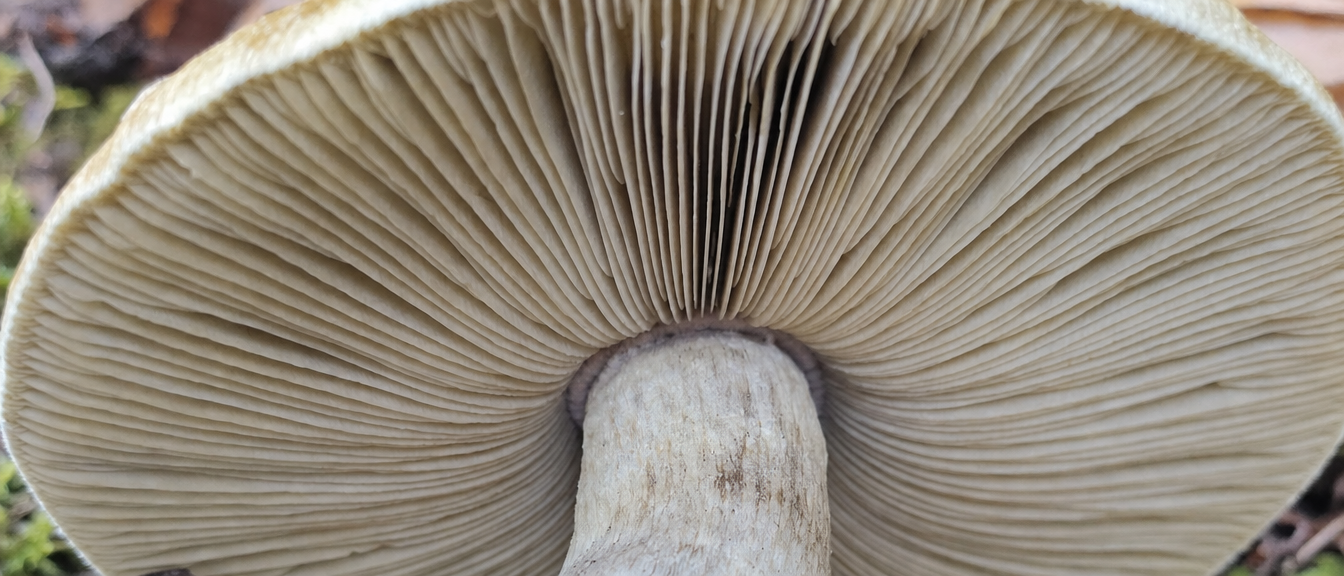
A small image helps hold the whole thing in mind. Think of each receptor as a door that psilocin knocks on. Knock once and the door answers fully. Knock on it relentlessly, dose after dose in quick succession, and the household stops coming to the door, drawing the latch and waiting for the visitor to give up. It takes a little time, days rather than minutes, before the door is willingly answered again. That is tolerance, in one picture, and it is also why patience rather than persistence is the only thing that restores the effect.
The image is worth pressing on a little, because it explains something people often find counterintuitive. The drug is not being used up, and it is not lingering in the body and crowding out the next dose. The molecule clears on its own fairly quickly. What changes is the receiving end. The same number of knocks arrives, but fewer doors are there to answer, so the message that gets through is quieter. This is why simply taking more does not solve the problem. Adding visitors to a street where most of the doors are bolted does not get you let in any faster. The only thing that works is the passage of time, while the cell rebuilds and re-exposes the receptors it had pulled inside. Tolerance, in other words, lives in the body's response rather than in the chemistry of the dose, and that distinction turns out to explain almost everything else about how the substance behaves over short stretches of time.
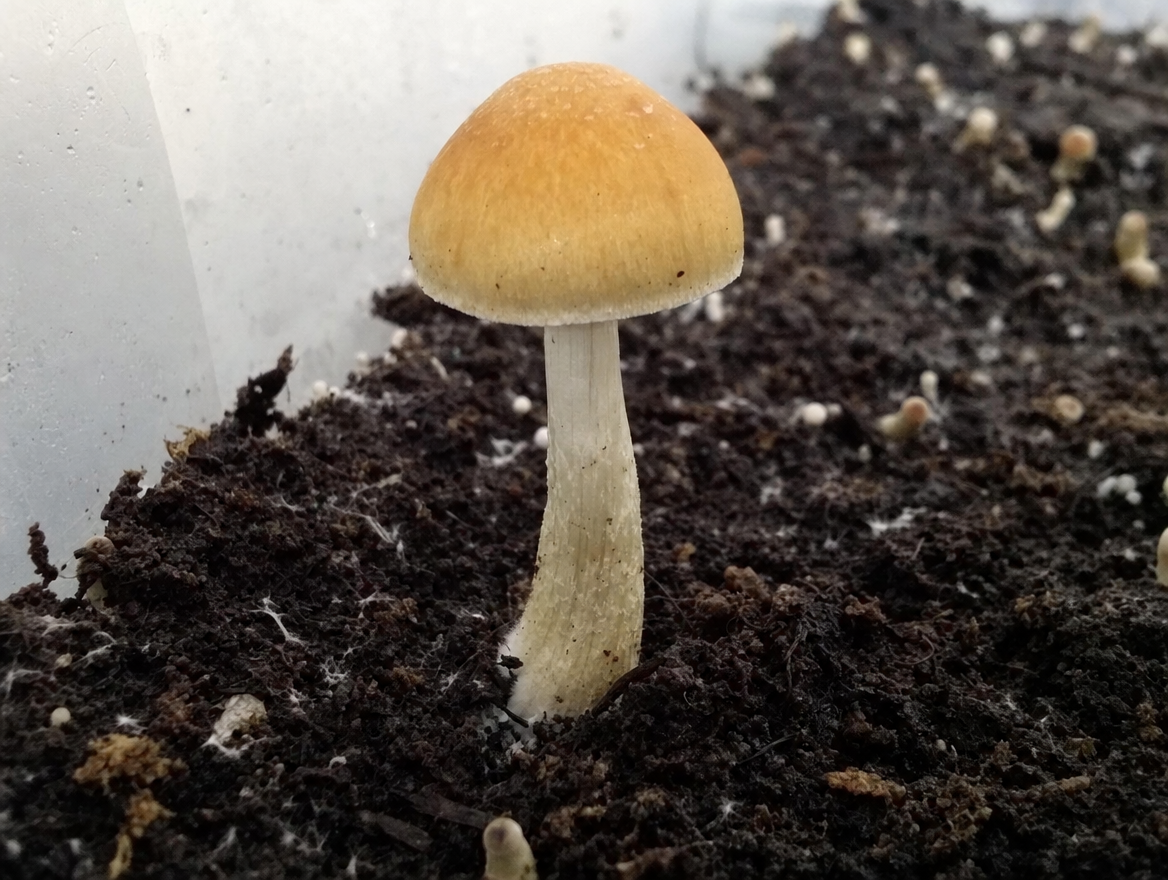
Cross-tolerance with other psychedelics
The effect does not stay politely inside psilocybin's own lane. It reaches across to the other classic psychedelics that lean on the very same receptor, and the usual names here are LSD, mescaline, and DMT, each of them producing its effects mainly through that same 5-HT2A agonism. The practical upshot is the kind of thing that surprises people. Take LSD one day and try psilocybin the next, and the psilocybin will feel markedly thinner than it should, because the receptors are still pulled back from the LSD. It runs the other direction too, and across the various pairings among the classics. The trade is not perfectly even. A few studies hint that the blunting runs harder from LSD to psilocybin than the reverse. But the broad pattern is solid and well documented, and it does not much matter which of the classics you reach for second.
Now the part that actually reveals the mechanism. The cross-tolerance does not extend to substances that work by some other route, and that hard boundary is exactly what tells you what is going on under the hood. MDMA is the clean example. It touches the serotonin system too, but through a different door entirely, flooding serotonin out rather than mimicking it at the receptor the way psilocin does, and it shows no meaningful cross-tolerance with the classic psychedelics. Ketamine makes the point even more sharply, since it works on NMDA receptors rather than serotonin receptors at all, and it produces no cross-tolerance with psilocybin in either direction. So the pattern follows the receptor, not the loose cultural label of psychedelic that lumps these compounds together in conversation. That single fact, that the tolerance respects the receptor and ignores the category, is the strongest sign that the mechanism is genuinely receptor-specific rather than something fuzzier happening at the level of the whole experience.
Implications for clinical use
All of this has blunt, practical consequences for how psilocybin gets used in a therapeutic setting, and the researchers building those settings have learned to design with the biology rather than against it. You cannot stack doses close together and expect each one to land the same, because the second closely spaced dose would mostly misfire, wasting both the material and the session built around it. So the major trials, including the well-known end-of-life and depression studies, leaned on either a single dose or doses set weeks apart. That spacing was not an arbitrary scheduling choice. It is precisely what the tolerance pharmacology says you have to do if you want the second session to mean anything.
Any therapeutic model that involves more than one dosing session has to reckon with the same constraint. The sessions have to be spread out, at least a week between them and usually a good deal more, and the timing has to be planned around the body's recovery curve rather than the therapist's calendar. This is a large part of why psilocybin-assisted therapy tends to be built around a small handful of sessions, often only one to three, instead of the weekly or even daily rhythm that ordinary talk therapy runs on. The pharmacology essentially forbids the high-frequency version of the model. You could not run it if you wanted to.
It is worth sitting with how unusual that makes the substance as a clinical tool. Most psychiatric medications work on the opposite logic. You take them daily, often for months or years, and the steady presence of the drug is the whole point, with benefit fading if you stop. Psilocybin inverts that completely. The drug is present for a single afternoon, the dosing session is rare and surrounded by preparation and follow-up rather than repeated on a schedule, and the tolerance pharmacology is one of the reasons it has to be that way. A treatment you physically cannot give twice in a row is a strange object inside a medical system organized around daily pills, and a good deal of the work in designing psilocybin protocols has been about fitting that strange object into a framework that was not built for it. The microdosing world has bumped into the same wall from a different angle, which is why most popular microdosing schedules deliberately write in rest days, partly to keep tolerance from quietly stacking up and partly out of a more cautious worry about stimulating the 5-HT2A receptor day after day after day.
What the pharmacology rules out
This is where a lot of people go wrong, and where the wasted effort tends to pile up, so it is worth laying out plainly what the tolerance simply makes impossible. Framed as biology, not as advice.
Trying to stretch or restart an experience by taking more during it, or shortly after it, mostly fails, and it fails for a reason that is now easy to see. The receptors are already retreating, already pulling inward, so anything added on the comedown delivers a faint echo, far less than the same material would give someone walking in fresh and fully sensitive. The arithmetic just does not pay, and it does not pay no matter how much extra goes in. For the same underlying reason, the full experience is simply not back on the table until sensitivity has rebuilt over a week or two, and that is a fact about the receptors themselves rather than a rule that anyone has chosen to impose. Then there is stacking, the idea of combining the classics close together to get something bigger. Take psilocybin shortly after LSD and you get less than either would give you alone at full sensitivity, not more, because the cross-tolerance makes the blend weaker rather than stronger, the precise opposite of what someone combining them is usually chasing. Every one of these cases lands on the same lesson. The biology draws hard limits, and no extra pile of material is going to erase them.
Tolerance and long-term use
Here is one of the genuinely interesting wrinkles, the part that runs against what you might brace for. That fast acute tolerance, so dramatic over a couple of days, does not seem to harden into chronic tolerance over the long haul. People who use psilocybin intermittently, well spaced, perhaps a handful of times across a year, tend to keep getting full-strength effects year after year. Set that against the many substances where long-term use leaves a lasting, grinding tolerance that persists even through breaks, and the contrast is striking. The classic psychedelics mostly keep their punch, provided the use stays occasional.
The why almost certainly sits in the same biology that produced the short-term effect in the first place. Receptor down-regulation after a single use unwinds on a short timescale, the doors open back up, and the process does not appear to drag in the slower, deeper changes that cause real trouble elsewhere. There is no sign of the neuroadaptation, the withdrawal, the sensitization to cues, the long rewiring that builds persistent tolerance and physical dependence with opioids, benzodiazepines, or stimulants. The system bends and then springs back to its original shape. It does not bend and stay bent. That difference, between a temporary dimming that fully reverses and a lasting structural change, is most of what separates psilocybin's tolerance story from the more familiar and more dangerous ones.
What tolerance suggests about use patterns
Pull all of this together and you start to see why the classic psychedelics carry an addiction profile so different from most other psychoactive drugs. The simple, stubborn fact that you cannot get anywhere taking psilocybin two days in a row builds a kind of enforced spacing right into the substance, a brake the drug applies to itself, the sort of thing most other drugs conspicuously lack. It refuses to cooperate with escalating use. Where many substances reward you, at least at first, for taking more and more often, psilocybin flatly declines to, handing back less and less until you stop and wait.
Put that built-in brake together with the absence of physical dependence and the genuine rarity of compulsive use, and you arrive at a profile in which seriously problematic use is comparatively uncommon. That said, and this matters, none of it adds up to harmless. Psychological dependence can still take root, harmful patterns of use are still possible, and a person can still build a life around a substance even when the pharmacology is not pushing them to escalate. So this is not a clean bill of health, and it should not be read as one. What it is, instead, is a structural difference in the foundation. The floor underneath psilocybin is built differently from the floor under drugs you can lean on with steadily rising frequency. For anyone studying psilocybin, or simply trying to understand it honestly rather than through hope or alarm, the tolerance is one of the bedrock facts to keep in view. It quietly shapes what the substance can and cannot do, which protocols make any sense at all, and how it ends up sitting apart from the rest of the psychoactive field.