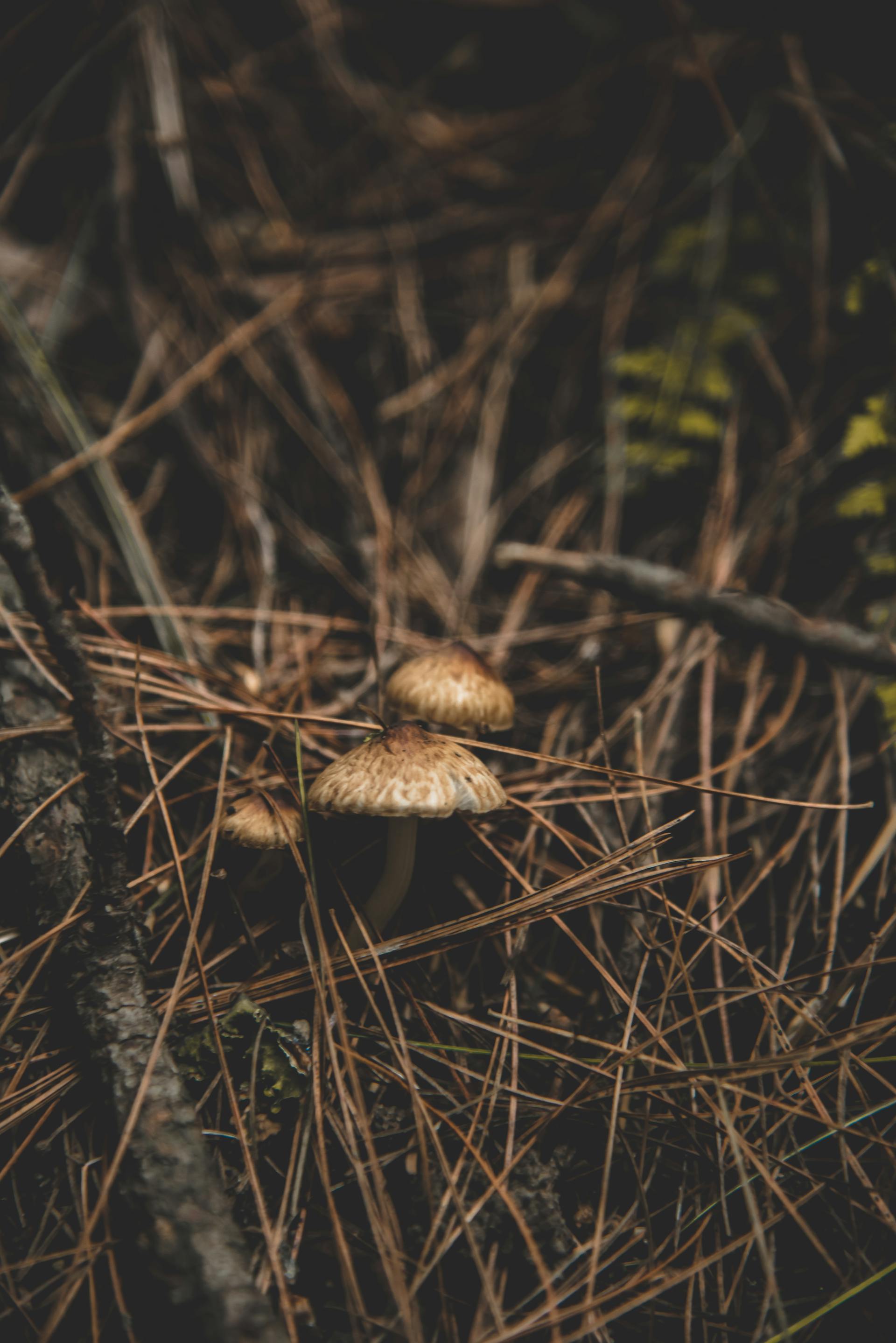
Genus at a glance
| Field | Detail |
|---|---|
| Classification | Genus |
| Family | Pluteaceae |
| Described species | ~300 (very few psychoactive) |
| Spore print | Pink to salmon-pink |
| Distribution | Worldwide on dead wood; diverse in temperate forest |
| Habitat | Decaying hardwood (occasionally conifer), sawdust, wood debris |
| Key alkaloids | Psilocybin, psilocin (in a small subset of species) |
Overview
Pluteus — the "deer" or "shield" mushrooms — is a large genus of wood-rotting fungi defined by two features that set it apart from the other psilocybin producers: free gills that do not touch the stem, and a distinctive pink spore print. The overwhelming majority of Pluteus are non-psychoactive decomposers; psilocybin is confined to a small handful of species, making this the most surprising and scattered occurrence of the chemistry among the four main genera. Taxonomically Pluteus sits near Volvariella, far from Psilocybe — so its psilocybin is an especially clear case of convergent or horizontally transferred biosynthesis.
Documented species
| Species | Notes | Distribution |
|---|---|---|
| P. salicinus | The best-documented active species; bluing, willow/hardwood logs | Europe, N. America |
| P. glaucus | Reported psilocybin content | Europe, Asia |
| P. cyanopus | Small, blue-footed; documented producer | N. temperate |
| P. nigroviridis | Rare, reported active | Scattered |
| P. villosus | Reported in some studies | Europe |
Under-documented & emerging
Psilocybin in Pluteus is documented from only a few species and a small number of studies, so the genus is the least chemically characterised of the four. Because the active species are uncommon, fruit briefly, and superficially resemble the many non-active Pluteus, they are easily overlooked — it is plausible that other producers exist but have never been tested. Pluteus taxonomy is also actively revised by DNA work, which keeps splitting and renaming species; some older psilocybin reports refer to taxa whose modern identity is uncertain. This is a genus where "we don't yet know" is the honest summary.
How to read this
Educational profile only. The pink spore print and free gills make Pluteus recognisable as a genus, but separating the rare active species from common inactive ones is not reliable in the field.