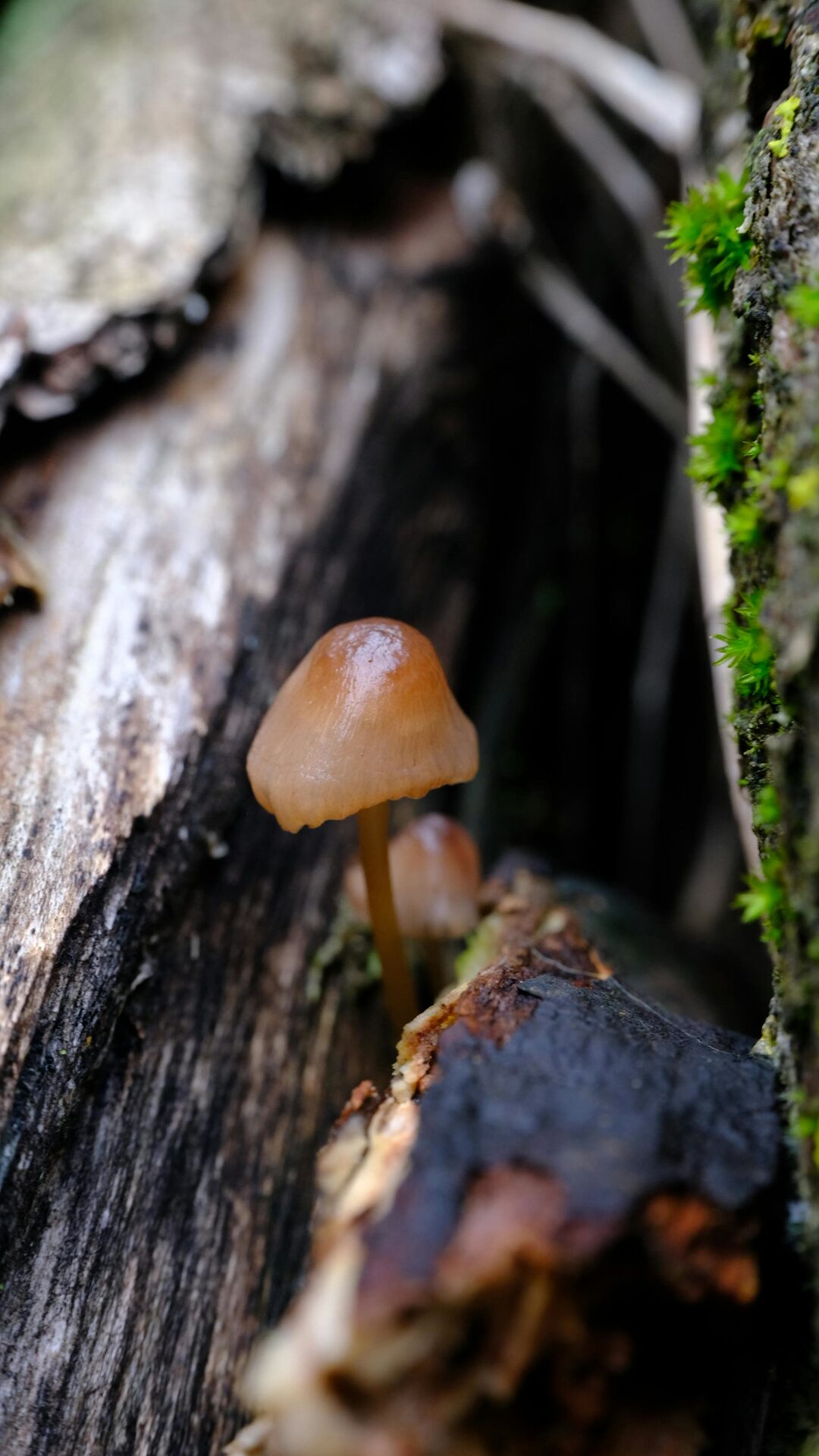
Genus at a glance
| Field | Detail |
|---|---|
| Classification | Genus |
| Family | Inocybaceae |
| Described species | ~1,000+ (a small minority psychoactive) |
| Spore print | Dull clay-brown to snuff-brown |
| Distribution | Worldwide; abundant in temperate woodland |
| Habitat | Ectomycorrhizal — associated with the roots of trees |
| Key alkaloids | Psilocybin/psilocin (a few species); muscarine (many species) |
Overview
Inocybe — the "fibrecaps" — is one of the largest and most dangerous genera of gilled fungi. The great majority of its roughly thousand species are not psychoactive, and many contain high levels of muscarine, a toxin that causes profuse sweating, salivation, and in severe cases cardiac and respiratory failure. Against this backdrop a handful of species also produce psilocybin, making Inocybe the clearest example of why "contains a tryptamine" and "safe to handle" are entirely separate questions.
Unlike the saprotrophic Psilocybe and Panaeolus, fibrecaps are ectomycorrhizal — they form partnerships with tree roots — so they fruit in woodland and parkland rather than on dung or wood debris. Most are small, brown, and fibrous-capped, and they are notoriously difficult to identify even for specialists; many species are separable only by microscopy.
Documented species
| Species | Notes | Distribution |
|---|---|---|
| I. aeruginascens | The best-known psilocybin producer; also contains aeruginascin; bluing-green | Europe, N. America |
| I. corydalina | Documented psilocybin content; greenish cap tones | Europe |
| I. haemacta | Reported psilocybin; reddening flesh | Europe |
| I. tricolor | Reported active | Central Europe |
Under-documented & emerging
Inocybe is taxonomically vast and unstable — DNA studies repeatedly split it into segregate genera (Inosperma, Mallocybe, Pseudosperma), and most species have never had any chemical analysis at all. The psychoactive members are few and poorly characterised, while muscarine-rich relatives that look almost identical grow in the same woods. The realistic picture is a genus where psilocybin is a rare exception within an overwhelmingly toxic and under-studied group.
How to read this
Educational profile only — and a cautionary one. Inocybe contains some of the more dangerous mushrooms encountered in temperate forests; the few psilocybin producers are not reliably separable from their toxic relatives in the field.