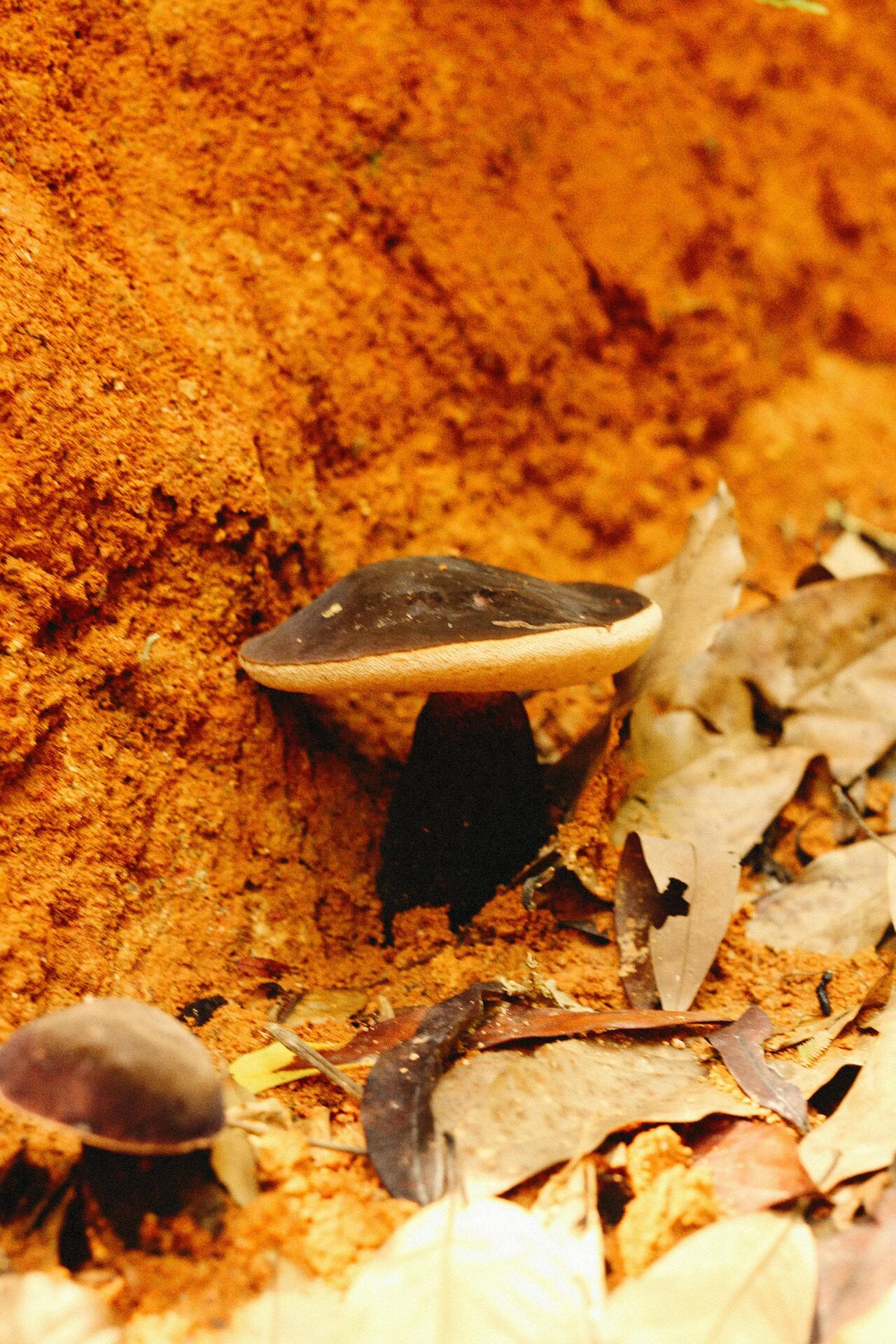
Genus at a glance
| Field | Detail |
|---|---|
| Classification | Genus |
| Family | Mycenaceae |
| Described species | ~600 (a very small minority psychoactive) |
| Spore print | White |
| Distribution | Worldwide; abundant in damp forest |
| Habitat | Decaying wood, leaf litter, moss, bark |
| Key alkaloids | Psilocybin/psilocin (reported in a few small species) |
Overview
Mycena — the "bonnets" — are tiny, delicate, often translucent mushrooms that carpet rotting wood and leaf litter in damp forests. The genus is best known for its bioluminescent species and its sheer diversity rather than for psychoactivity, but a few small Mycena have been reported to contain psilocybin, placing the genus at the experimental edge of the documented producers.
Because the fruit bodies are so small and the white spore print sets them apart from the main dark-spored producers, Mycena sit somewhat outside the usual "magic mushroom" picture. Their inclusion underlines the central theme of this index: psilocybin recurs in scattered, sometimes unexpected corners of the fungal kingdom.
Documented species
| Species | Notes | Distribution |
|---|---|---|
| M. cyanorrhiza | Tiny wood-inhabiting species with a bluing stem base; psilocybin reported | Europe |
| M. amicta | Bluing tones reported; activity not firmly established | N. temperate |
Under-documented & emerging
Psilocybin in Mycena rests on a small number of reports and tiny quantities of material, so the evidence is preliminary rather than settled. With around six hundred species, the great majority untested, Mycena is a genus where psilocybin may be more widespread than current records show — or confined to a handful of oddities. It is among the least-characterised producers and a candidate for future chemical survey work.
How to read this
Educational profile only. The active Mycena are minute and the chemistry is preliminary; this entry documents the genus's place at the frontier of psilocybin research rather than offering any identification guidance.