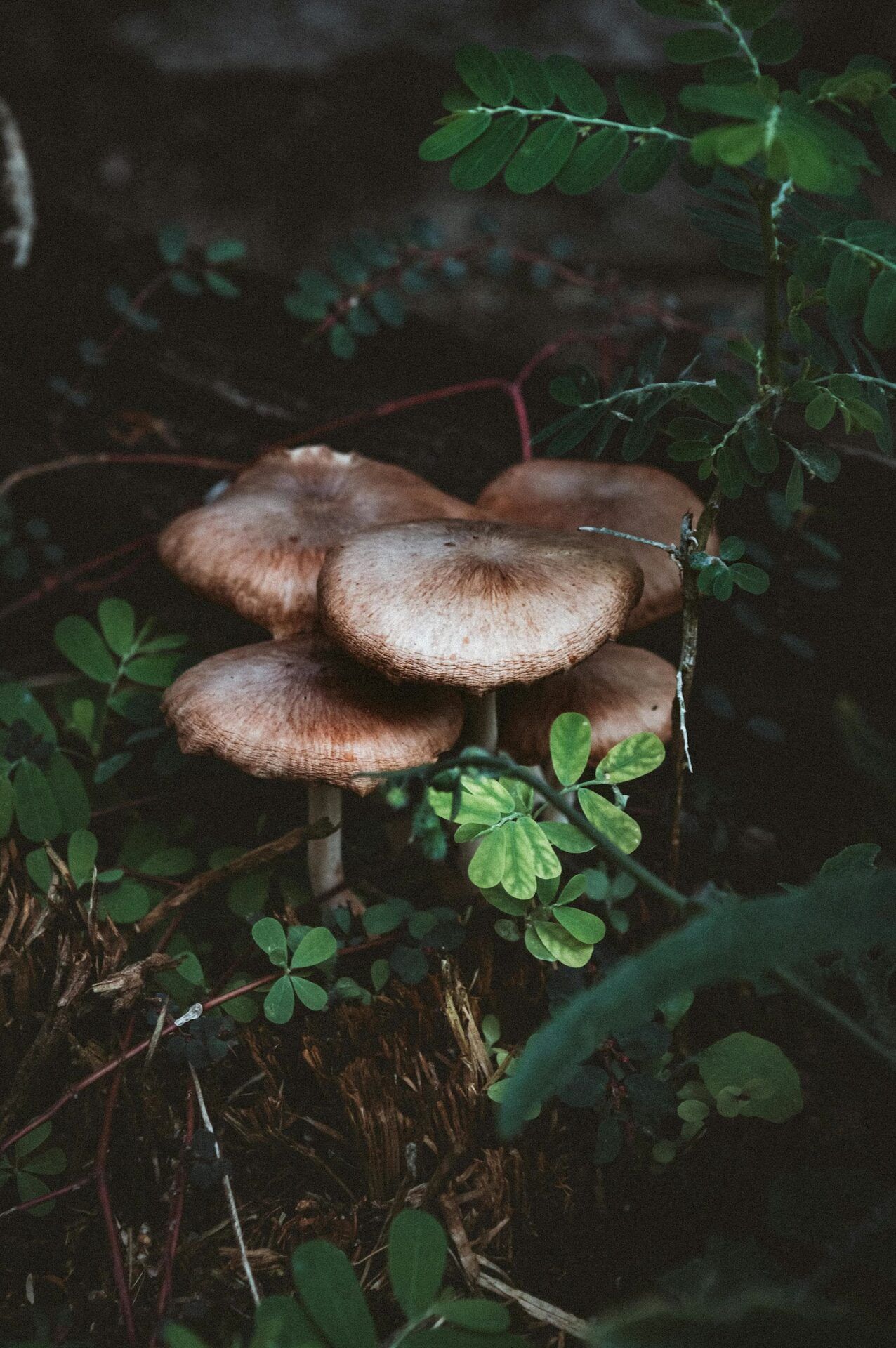
It is natural to assume that psilocybin mushrooms form a single, coherent group — one branch of the fungal tree of life that happens to make a psychoactive compound. The reality is stranger and more interesting. Psilocybin is produced by mushrooms scattered across several distinct genera that are only distantly related to one another. The capacity to synthesize this molecule has appeared, and reappeared, in separate lineages.
This pattern has consequences. It means there is no single appearance, habitat, or set of features that defines “a psilocybin mushroom.” It means identification is genuinely difficult, because the relevant species are spread across groups with very different characteristics — and share habitats and appearances with toxic species. And it raises a fascinating biological question: why has the same chemistry evolved independently so many times?
This article surveys the main psilocybin-producing genera, what distinguishes them, and what their scattered distribution across the fungal tree reveals.
The Genus Psilocybe: The Core Group
When people picture psilocybin mushrooms, they are usually picturing Psilocybe. This is the genus that contains the largest number of psychoactive species and the ones most central to both research and traditional use.
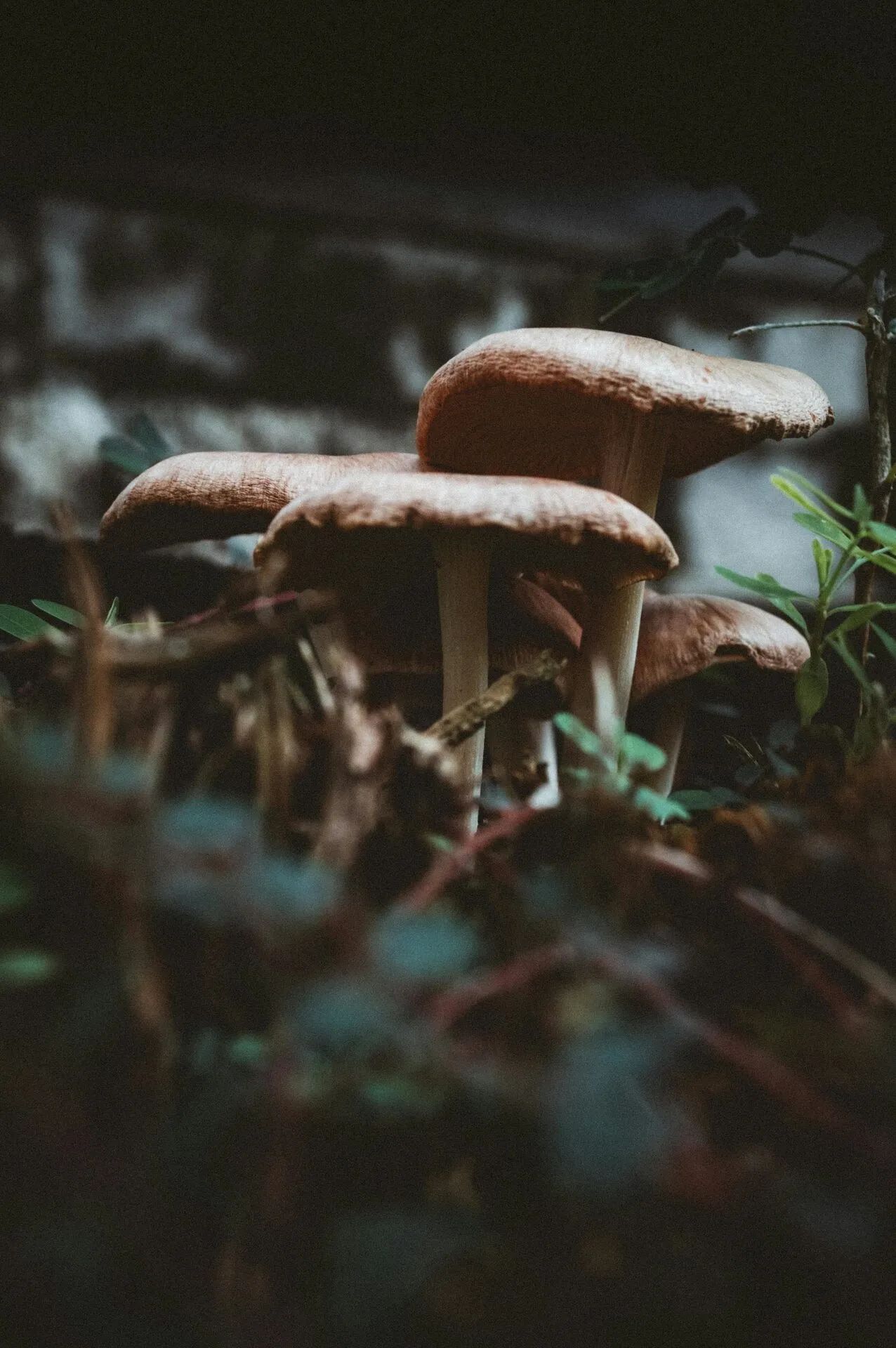
Psilocybe species are typically small to medium mushrooms with conic to convex caps, often with a hygrophanous quality — meaning they change color noticeably as they lose moisture. Many bruise blue where handled or damaged, the visible sign of psilocin oxidizing in air. The spore print is characteristically dark purple-brown to black. They tend to grow in nutrient-rich substrates: grasslands, dung, wood debris, mossy ground, and disturbed soils.
The genus has a global distribution, with species native to the Americas, Europe, Asia, Africa, and Oceania. Psilocybe cubensis is the most widely recognized, partly because it is relatively large, relatively easy to identify, and grows readily in subtropical climates. But the genus contains well over a hundred psychoactive species, ranging from the tiny Psilocybe semilanceata of European pastures to a variety of wood-loving and dung-loving species across continents.
Crucially, Psilocybe also shares habitats and a general appearance with several dangerous mushrooms. The genus Galerina, which contains deadly amatoxin-producing species, includes wood-growing mushrooms that can superficially resemble some Psilocybe and have caused fatal poisonings among people hunting psychoactive species. This overlap is one of the central reasons that field identification of psilocybin mushrooms is so hazardous.
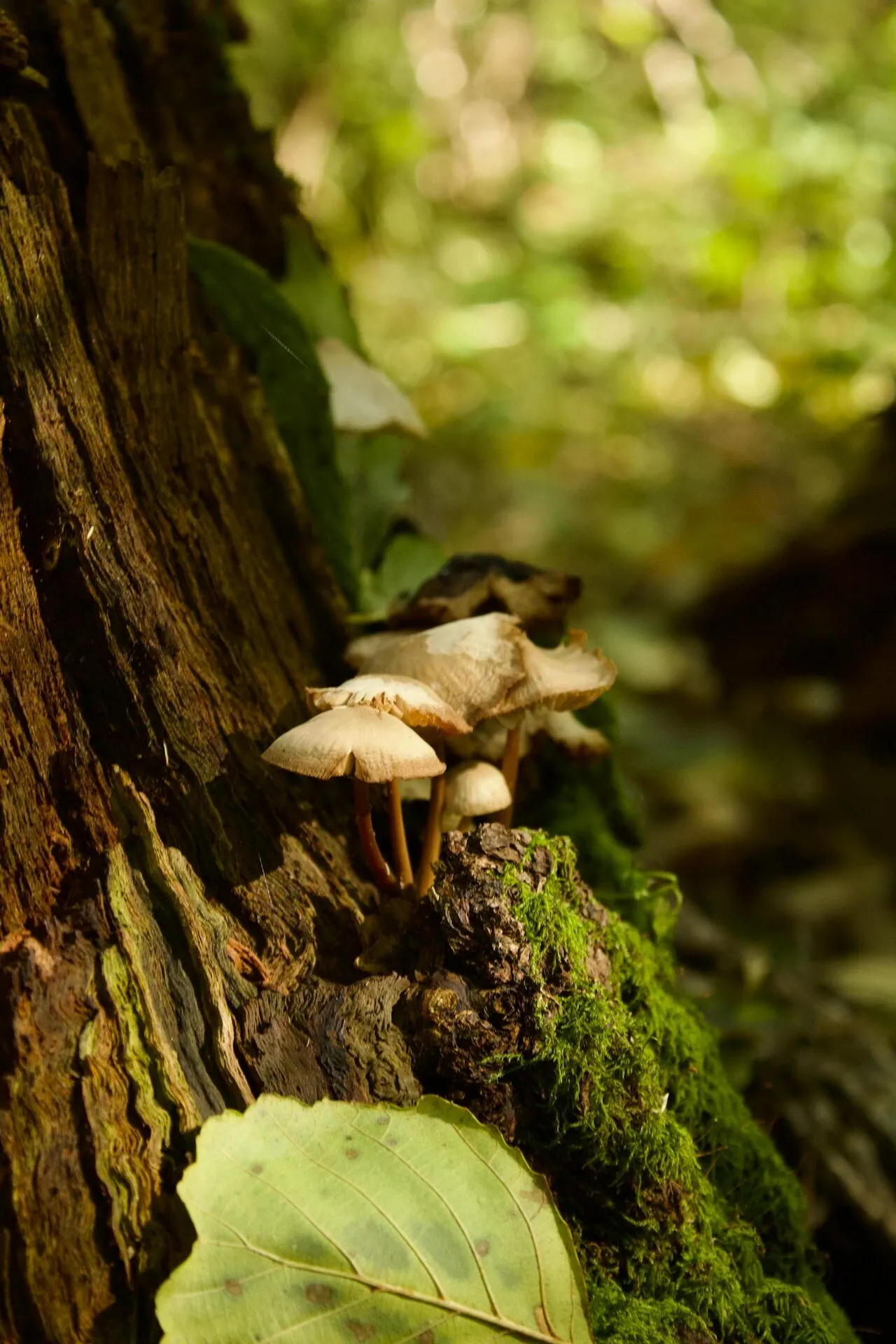
The internal diversity of Psilocybe is itself worth appreciating. Some species are tiny pasture mushrooms that appear in autumn grassland; others are robust wood-decomposers; still others are tightly bound to the dung of specific animals. They differ in potency, in season, in geography, and in the substrates they require. What unifies them is not appearance but biochemistry and a set of recurring features — the bluing reaction, the dark spore print, the hygrophanous cap. For the mycologist, Psilocybe is less a single look than a family resemblance running through a large and varied group, which is exactly why no single photograph can stand in for the genus.
The Genus Panaeolus
The second major psilocybin-producing genus is Panaeolus, a group of dung- and grassland-dwelling mushrooms found worldwide.
Panaeolus species are often slender, with bell-shaped or convex caps and a characteristic mottled appearance to the gills as the spores mature unevenly. The spore print is black. Like Psilocybe, many psychoactive Panaeolus species favor nutrient-rich substrates, and several of the most potent are closely associated with the dung of grazing animals.
Not all Panaeolus are psychoactive — the genus contains both active and inactive species, sometimes growing in the same environments, which complicates identification considerably. The active species produce psilocybin and psilocin much as Psilocybe does, despite the two genera being distinct. Panaeolus sits in a different part of the fungal tree, related to the inky-cap mushrooms, and its possession of psilocybin is not inherited from a shared psychoactive ancestor with Psilocybe but appears to have arisen separately.
The mottled gills and black spore print distinguish Panaeolus from Psilocybe on close inspection, but the two share enough general character — small brown mushrooms of rich ground — that they are easily confused by the untrained eye, both with each other and with non-psychoactive and toxic lookalikes.
The dung association of many potent Panaeolus species is ecologically telling. Animal dung is a concentrated, nutrient-rich, and intensely contested resource, colonized rapidly by a succession of specialized fungi. A mushroom that can establish itself in dung gains access to abundant nutrition but must compete with many other organisms — bacteria, other fungi, and a dense community of insects and their larvae. It is precisely in these crowded, high-stakes substrates that psilocybin production appears most often, a clue that runs through the whole story of these genera and points toward the ecological function of the compound discussed later in this article.
The Genus Gymnopilus
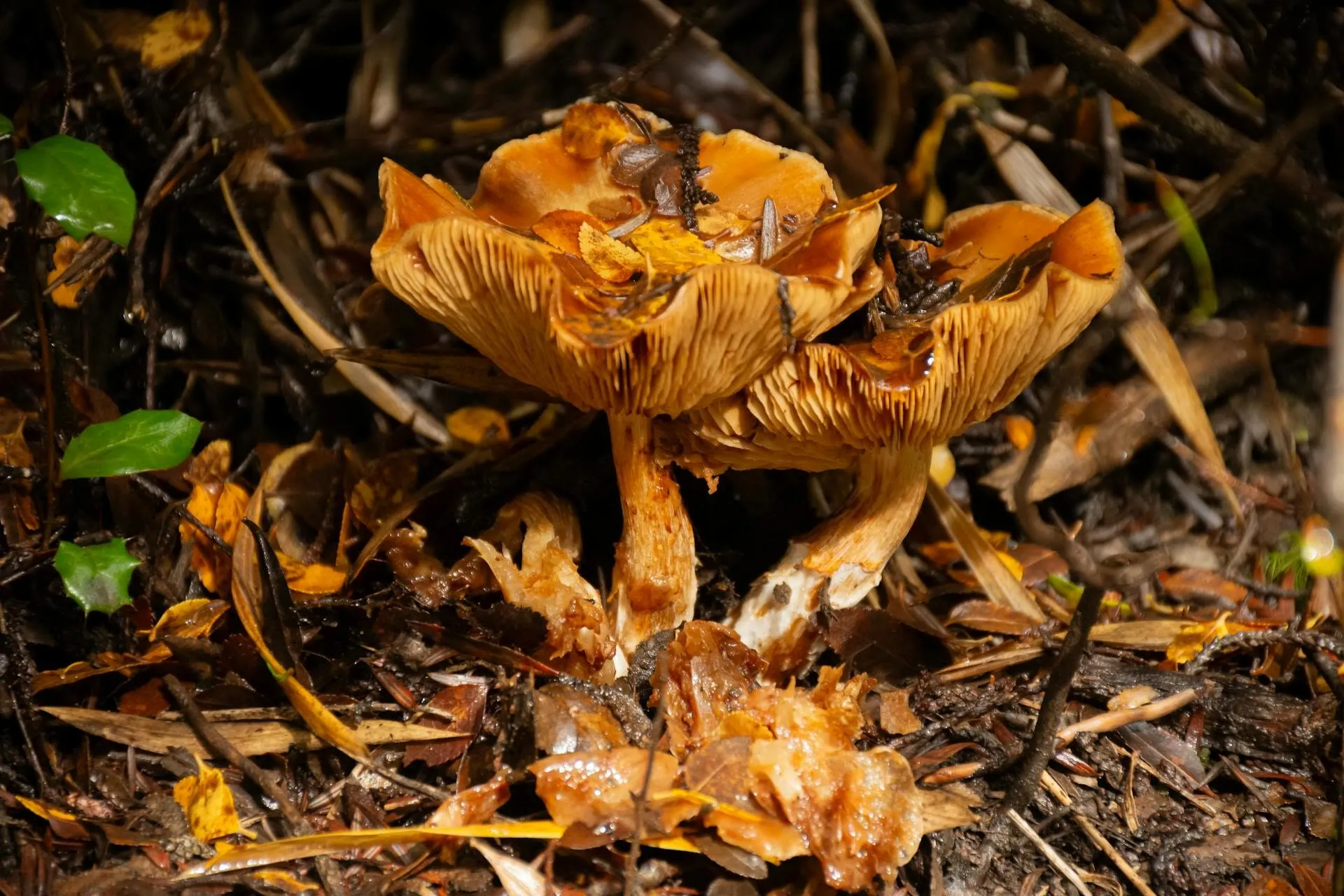
Gymnopilus is a third psilocybin-producing genus, and it looks quite different from the first two. These are typically wood-rotting mushrooms, often growing in clusters on dead logs, stumps, and buried wood, and many are notably larger and more brightly colored — frequently orange to rusty-yellow.
The spore print of Gymnopilus is rust-orange to bright rusty brown, a clear contrast with the dark purple-black of Psilocybe and the black of Panaeolus. The flesh is often distinctly bitter. A number of Gymnopilus species produce psilocybin, the best known being Gymnopilus luteofolius and its relatives, though as with the other genera, many Gymnopilus species contain no psilocybin at all.
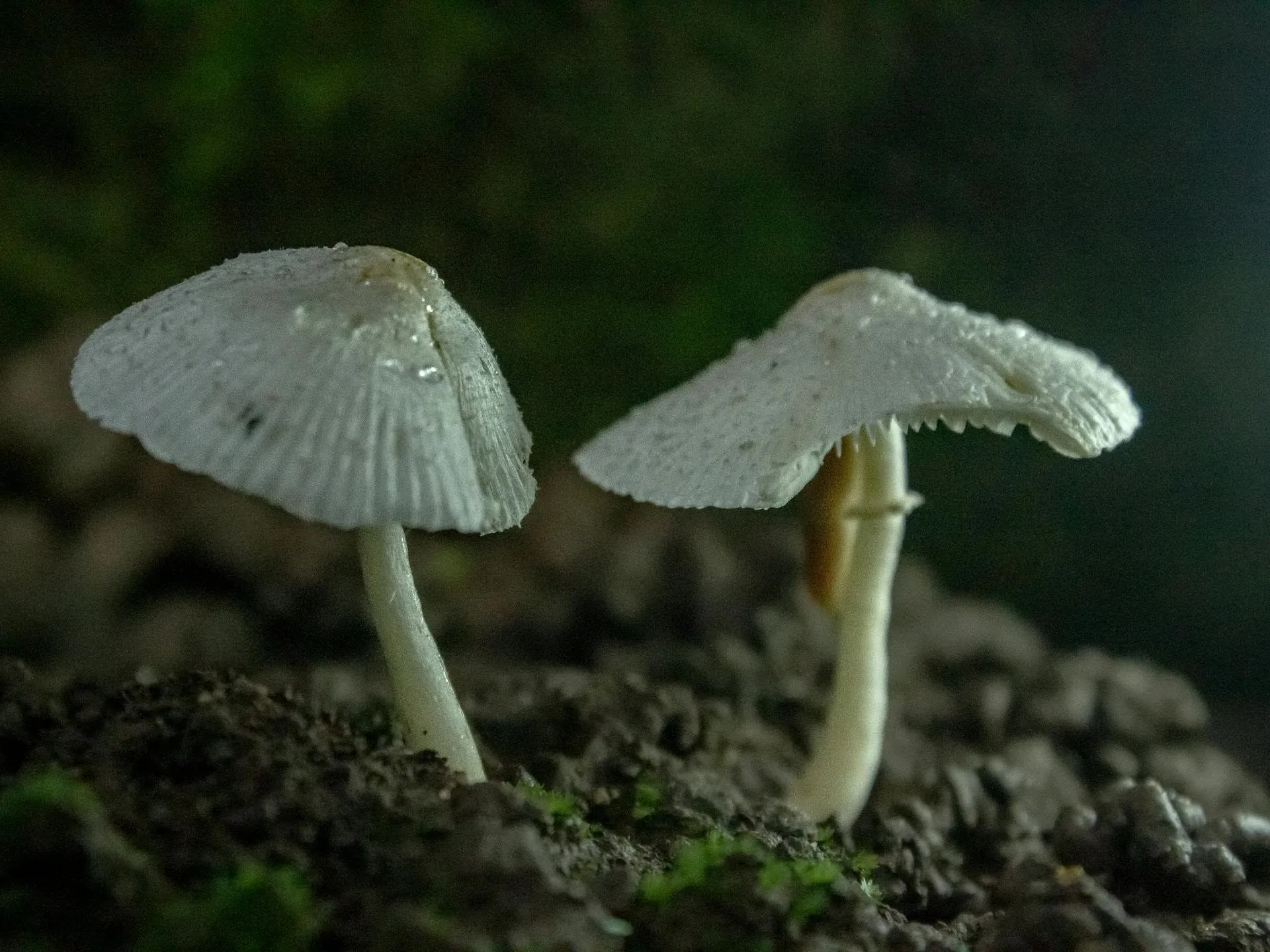
Gymnopilus belongs to yet another branch of the fungal tree, related to Cortinarius and the web-cap mushrooms — a group that also includes seriously toxic species. Its psilocybin production is, again, evolutionarily separate from that of Psilocybe and Panaeolus. The contrast in appearance is instructive: a large, bright orange, wood-rotting, bitter mushroom with a rusty spore print could hardly look more different from a small, brown, dung-loving Psilocybe, yet both make the same psychoactive compound.
The bitterness of Gymnopilus is itself a notable feature. Many species are intensely bitter, which in practice means they are unlikely to be consumed in quantity by accident or appetite. This bitterness, like the bluing reaction in Psilocybe, hints at the chemical complexity of these fungi — they produce a range of compounds beyond psilocybin, and the interplay of those compounds varies across species. The genus is a reminder that “psilocybin mushroom” describes one feature of an organism that may contain many other biologically active substances, not all of which are well characterized.
The Genus Pluteus
A fourth and more surprising group is Pluteus, the deer mushrooms. Most Pluteus species are saprotrophic wood-rotters with no psychoactive properties, but a small number — most notably Pluteus salicinus — produce psilocybin.
Pluteus is distinguished by a pink spore print and by free gills that do not attach to the stem. This pink-spored, wood-growing group is taxonomically quite distant from the other psilocybin producers, sitting near the genus Volvariella. The presence of psilocybin in a handful of Pluteus species is one of the clearest illustrations of just how scattered this chemistry is across the fungal kingdom.
The psychoactive Pluteus are not widely used and are far less prominent than Psilocybe or Panaeolus, but their existence is biologically significant. They extend the list of psilocybin-producing genera into yet another distinct lineage, reinforcing the picture of a compound that has appeared repeatedly and independently.
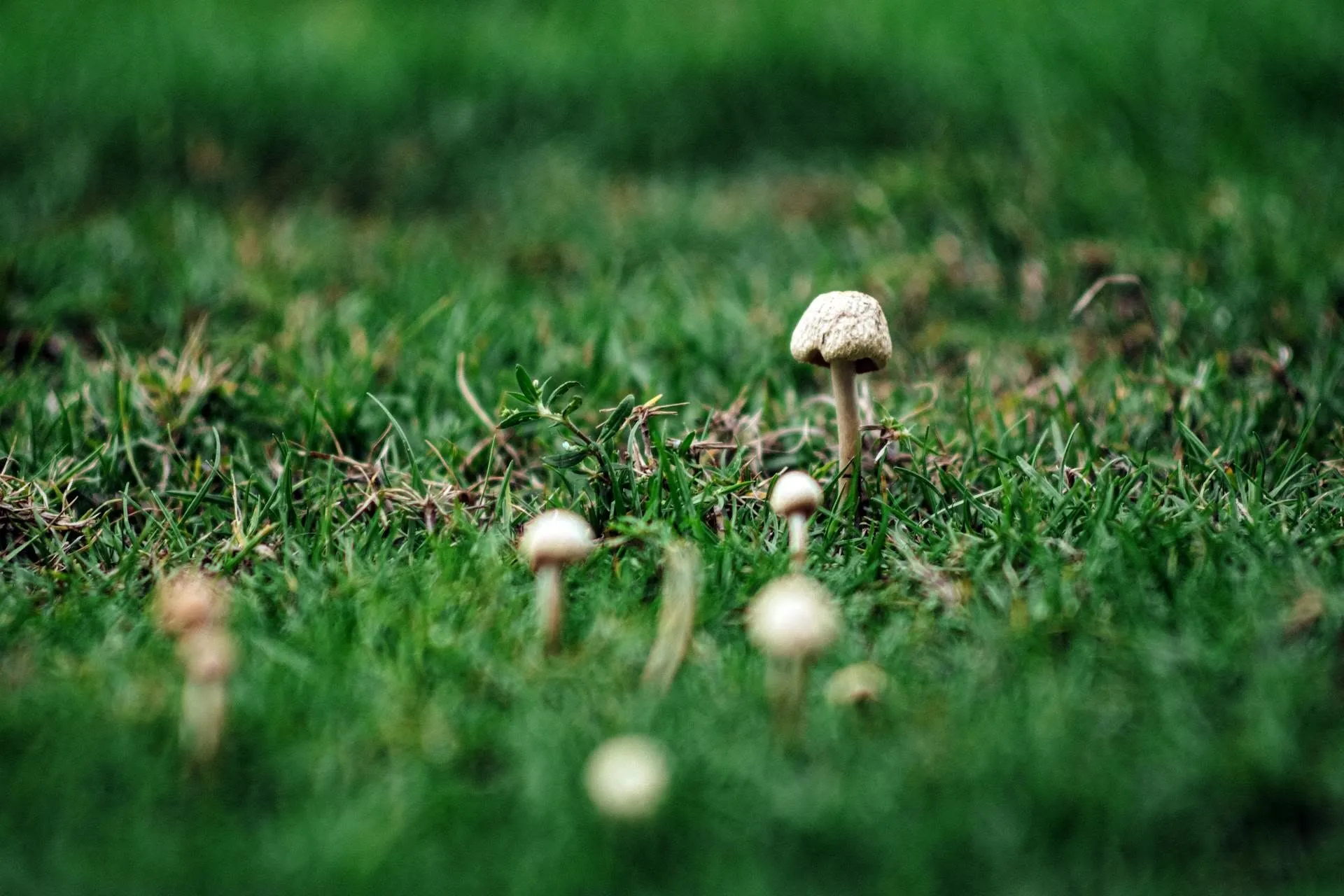
The four genera covered so far — Psilocybe, Panaeolus, Gymnopilus, and Pluteus — span an enormous taxonomic distance. They differ in spore color across the full range from purple-black to rust to pink; they differ in habitat across dung, grassland, and wood; they differ in size from a few centimeters to robust clustered fruitings; and they sit on genuinely separate branches of the fungal tree, each closer to various non-psychoactive and toxic relatives than to one another. If you were handed one specimen from each genus with no context, nothing about their shared possession of psilocybin would be obvious from looking at them. That disconnect between appearance and chemistry is the single most important thing to understand about this group of mushrooms.
Other and Lesser-Known Producers
Beyond these four, psilocybin has been documented in additional genera, including some species of Inocybe, Conocybe, Pholiotina, and others. Several of these are taxonomically scattered and, importantly, several contain extremely toxic species — some Inocybe and Conocybe relatives are among the more dangerous mushrooms in the field.
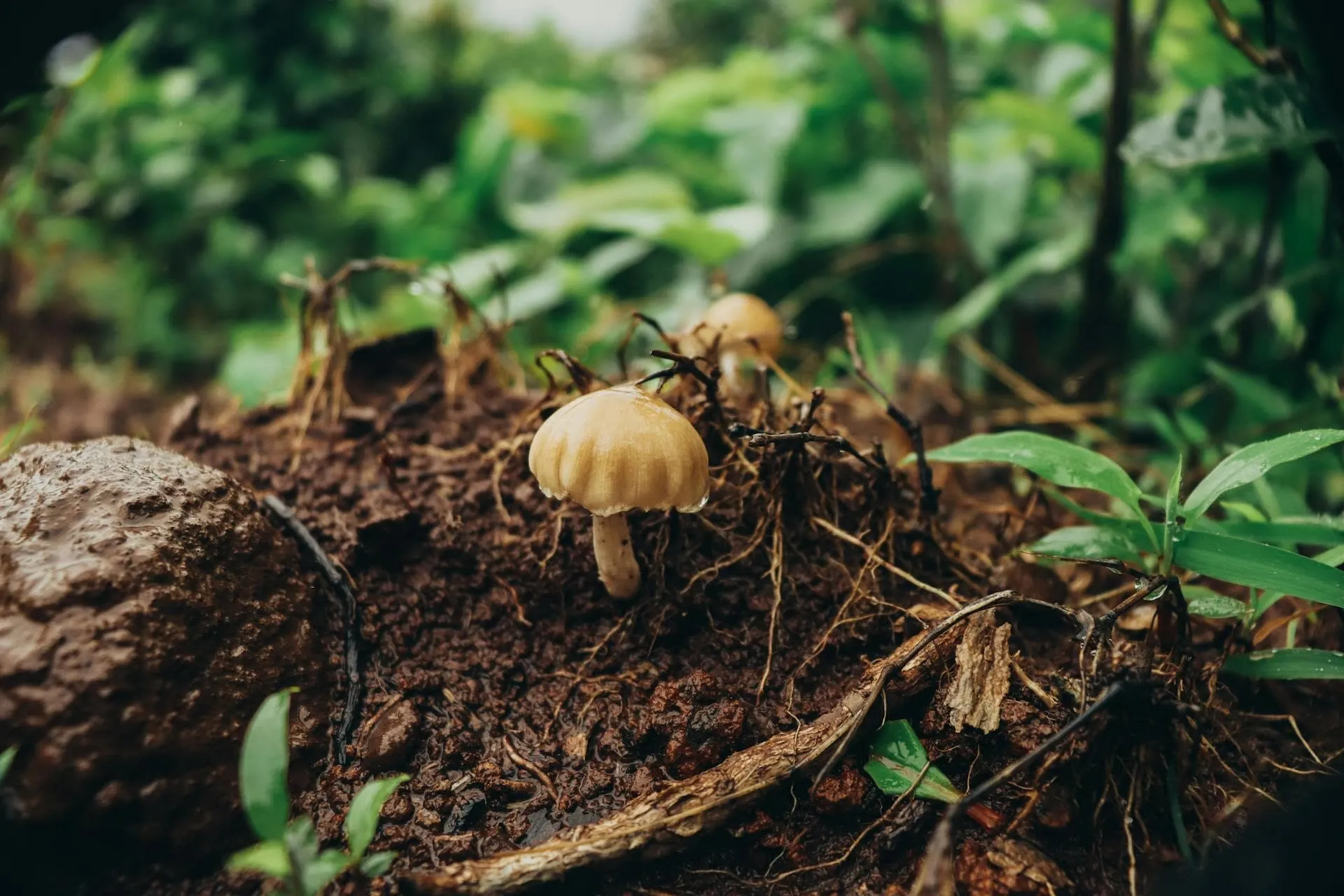
The documentation of psilocybin across these additional genera is uneven, and the active species are often poorly known and easily confused with their toxic relatives. For practical purposes, the lesser-known producers are far more relevant as a warning than as a resource: they demonstrate that “contains psilocybin” and “safe to handle or consume” are entirely separate questions, and that the chemistry can appear in groups where the risk of fatal misidentification is very high.
What all of these scattered occurrences share is the underlying biochemistry. The genes responsible for psilocybin synthesis have been identified, and comparative genetic work suggests the pathway has moved between lineages and arisen in ways that account for its patchy, cross-genus distribution.
Convergent Evolution and Gene Transfer
The central puzzle is why psilocybin appears in so many unrelated groups. Two mechanisms are thought to be involved, and they are not mutually exclusive.
The first is convergent evolution: separate lineages independently evolving the same trait because it provides a similar advantage. The second, supported by genetic studies, is horizontal gene transfer — the movement of the psilocybin-synthesis genes between fungal species that share habitats, particularly the nutrient-rich, competitive environments of dung and decomposing wood.
The leading hypothesis for why the trait is favored concerns insects. The dung and wood substrates where many psilocybin producers live are also crowded with fungus-eating insects, and there is evidence that psilocybin may interfere with insect feeding behavior. If psilocybin functions partly as a deterrent against insects competing for the same rich but contested substrate, then any fungus living in those environments would benefit from acquiring the trait — which could explain both its repeated independent evolution and its apparent transfer between co-occurring species.
This remains an area of active research, and the full story is not settled. But the pattern itself is clear and well-documented: psilocybin is a chemistry that fungal life has arrived at more than once, in more than one way, across distantly related groups sharing similar ecological pressures.
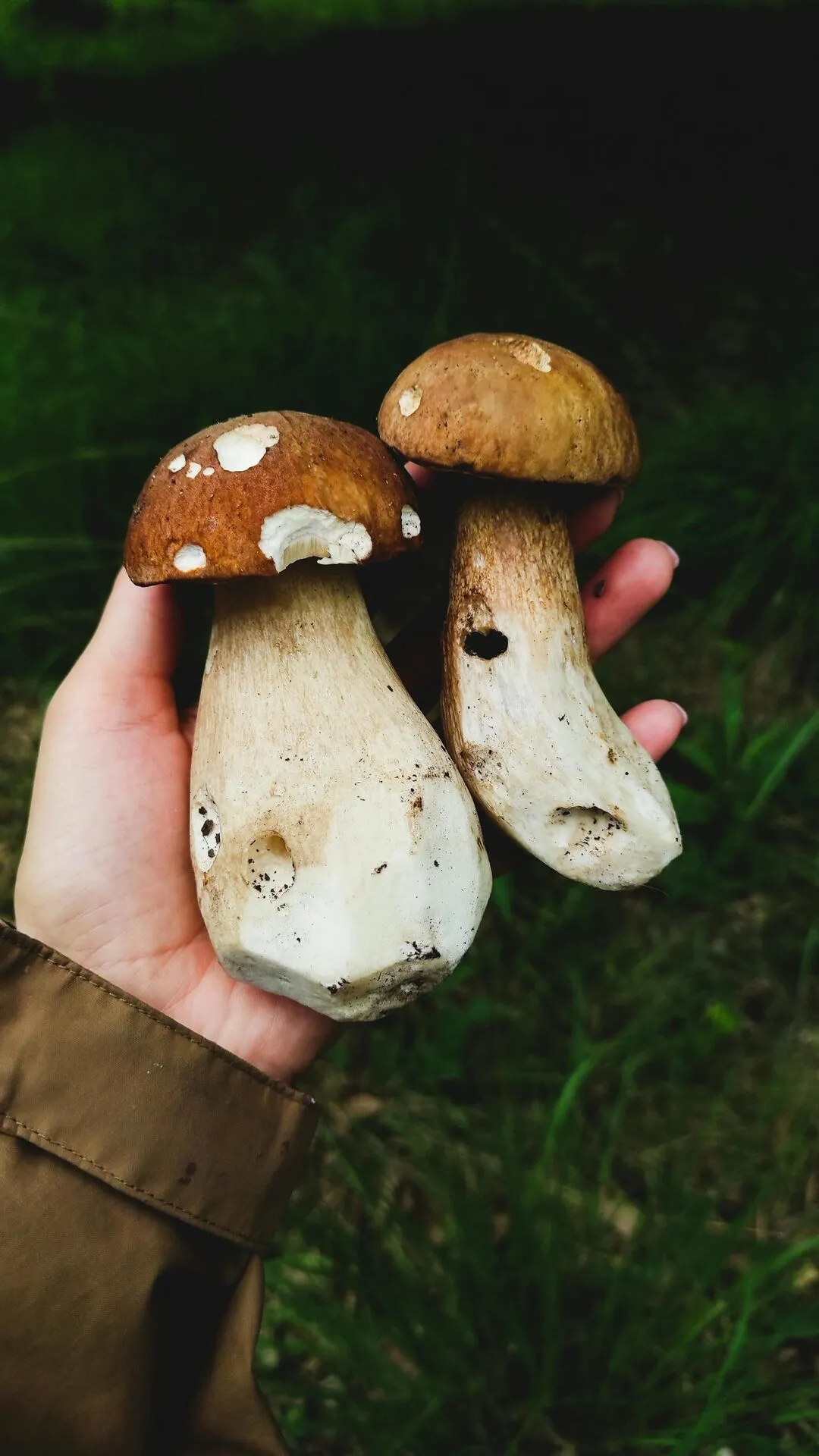
Horizontal gene transfer is unusual among complex organisms but well-documented in fungi, which can exchange genetic material more readily than plants or animals, especially where different species grow intermingled in the same substrate. The psilocybin gene cluster appears to be relatively self-contained and transferable, which would help explain how it could move between co-occurring fungi rather than being inherited only down a single line of descent. The combination of a portable genetic package and a shared, insect-rich habitat creates exactly the conditions under which the same trait could spread across unrelated neighbors — a kind of biochemical innovation passed sideways through an ecological community rather than handed straight down a family tree.
What This Means for Identification
The scattered distribution of psilocybin has a sobering practical implication. Because the active species span multiple genera with very different appearances, there is no simple visual rule that identifies a psilocybin mushroom. They are not all small and brown, not all blue-bruising, not all dung-loving, not all dark-spored.
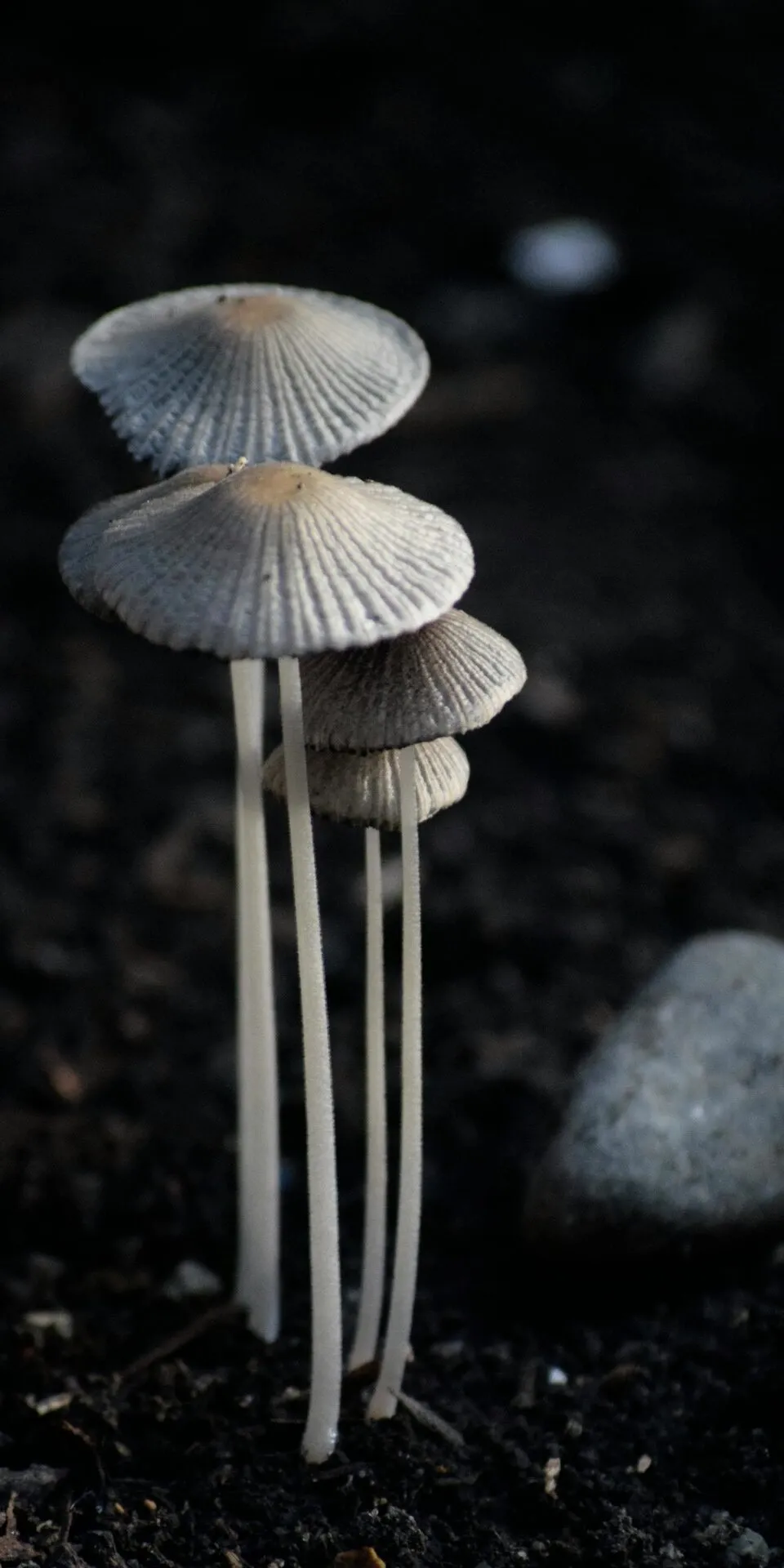
Worse, each of the producing genera shares habitat and appearance with toxic mushrooms — Psilocybe with deadly Galerina, the lesser producers with dangerous Inocybe and Conocybe relatives. The features that distinguish active from toxic species are often subtle and require exactly the kind of careful, multi-feature identification covered in our anatomy guide: spore print color, gill attachment, base structure, habitat, and microscopic detail.
This is why responsible sources consistently emphasize that field identification of psilocybin mushrooms is genuinely dangerous, and why the existence of look-alike toxic species in the same genera and habitats is not a minor caveat but a central fact. Understanding the genera is valuable for biological literacy; it is not a substitute for the rigorous, cautious identification that safety actually requires.
The scattered taxonomy also undermines the comfortable idea that a person could learn “the look” of a psilocybin mushroom the way one might learn to recognize a single edible species. There is no single look. A reliable identification within any of these genera depends on assembling several independent lines of evidence — spore print color, the precise nature of the gill attachment, the structure of the stem base, the substrate and habitat, the bruising reaction, and frequently microscopic spore characteristics — and then ruling out every toxic species that shares those features. That is demanding work even for trained mycologists, and the cross-genus spread of psilocybin makes it harder, not easier, because the relevant species do not cluster into one tidy, learnable group. The biology that makes psilocybin fascinating is the same biology that makes its mushrooms genuinely difficult and risky to identify in the field.
A Compound Without a Single Home
The picture that emerges is of psilocybin as a chemistry rather than a lineage. It belongs not to one branch of the fungal tree but to a scattering of branches that arrived at the same molecule under similar pressures, sometimes inventing it and sometimes, apparently, sharing the genetic recipe.
For the curious reader, this is a richer and more accurate understanding than the common assumption of a single “magic mushroom” group. The next time the term comes up, it is worth remembering that it refers to dozens of species across several only-distantly-related genera — a convergence of biology rather than a single kind of organism, and a reminder that nature arrives at its most interesting solutions by more than one road.
It is also a useful corrective to how the subject is often presented. Popular accounts tend to flatten this diversity into a single iconic image, usually a Psilocybe cubensis, as though it stood for the whole phenomenon. The truth is that the phenomenon has no single representative. To understand psilocybin mushrooms is to understand a distributed trait — one chemistry expressed by many organisms, shaped by shared ecology and portable genetics, and embedded in a fungal kingdom that remains, in many of its details, only partly explored. The genera surveyed here are the best-documented producers, but the full extent of psilocybin across the fungal world is still being mapped, and the story is very likely not yet complete.