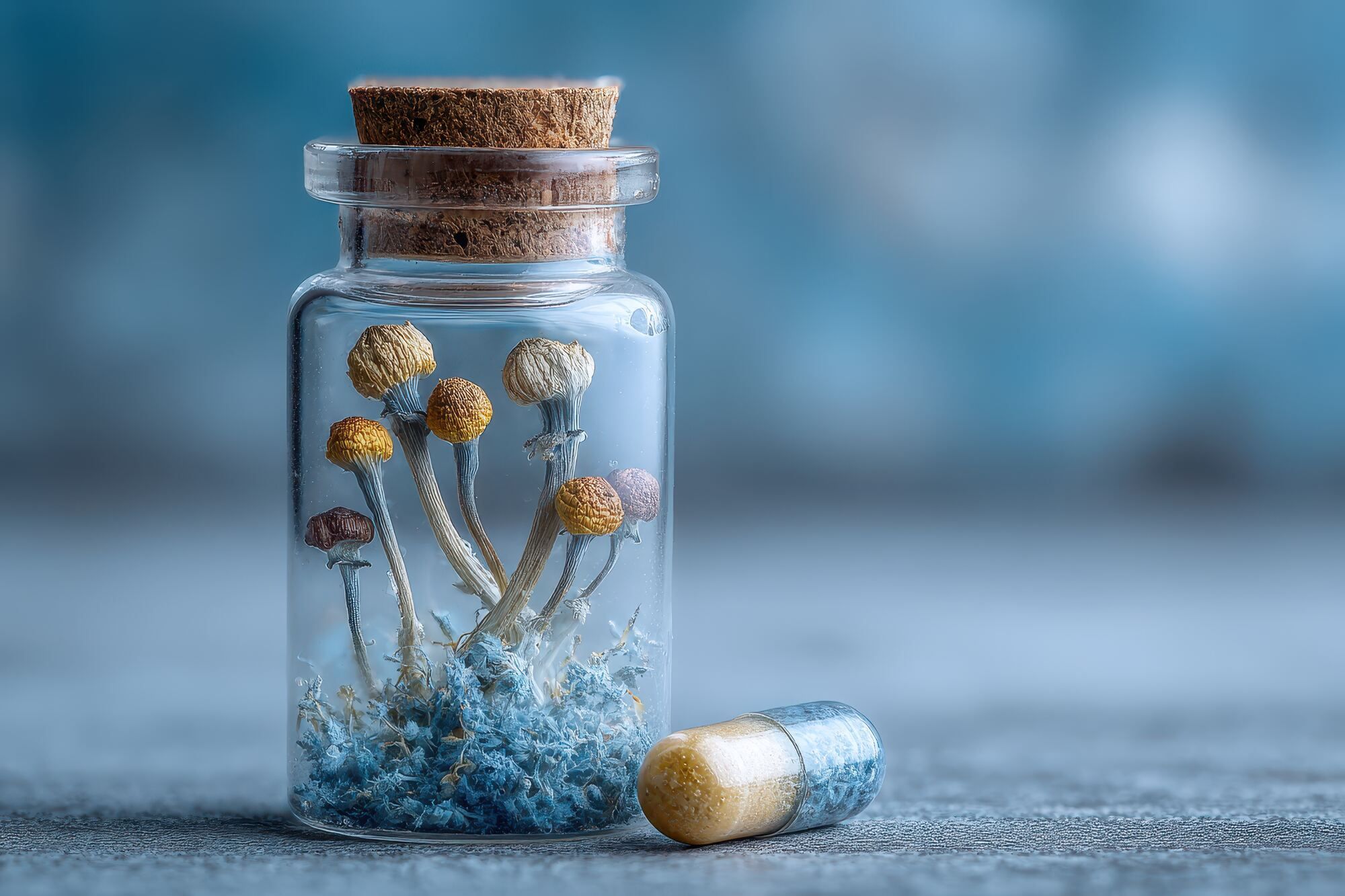
Psilocybe
Psilocybe (Fr.) P. Kumm.
The genus Psilocybe contains the majority of psilocybin-producing fungi documented to date — more than 200 species across diverse habitats and climates. Originally placed in Stropharia, the genus was reorganized by mycologist Paul Kummer in the late nineteenth century and has been further refined through molecular phylogenetic work in the 2000s.
The defining biochemical feature of the genus is the production of indole alkaloids — psilocybin, psilocin, baeocystin, and norbaeocystin — encoded by a compact cluster of genes that was fully characterized in 2017. Not every species in the genus produces these compounds, but the majority do.
Field characteristics common to psilocybin-producing Psilocybe species include a dark purple-brown spore print, blue bruising on damaged tissue (the visible signature of psilocin oxidation), a persistent partial veil that often leaves a ring on the stem, and growth on decaying organic substrates including wood, dung, and leaf litter.
The most widely known species is Psilocybe cubensis, profiled in detail in our archive. Other significant species include P. semilanceata (the “liberty cap” of European grasslands), P. cyanescens (a wood-decay species of the Pacific Northwest), P. mexicana (the species first chemically analyzed by Albert Hofmann), and P. azurescens (one of the most potent species documented).