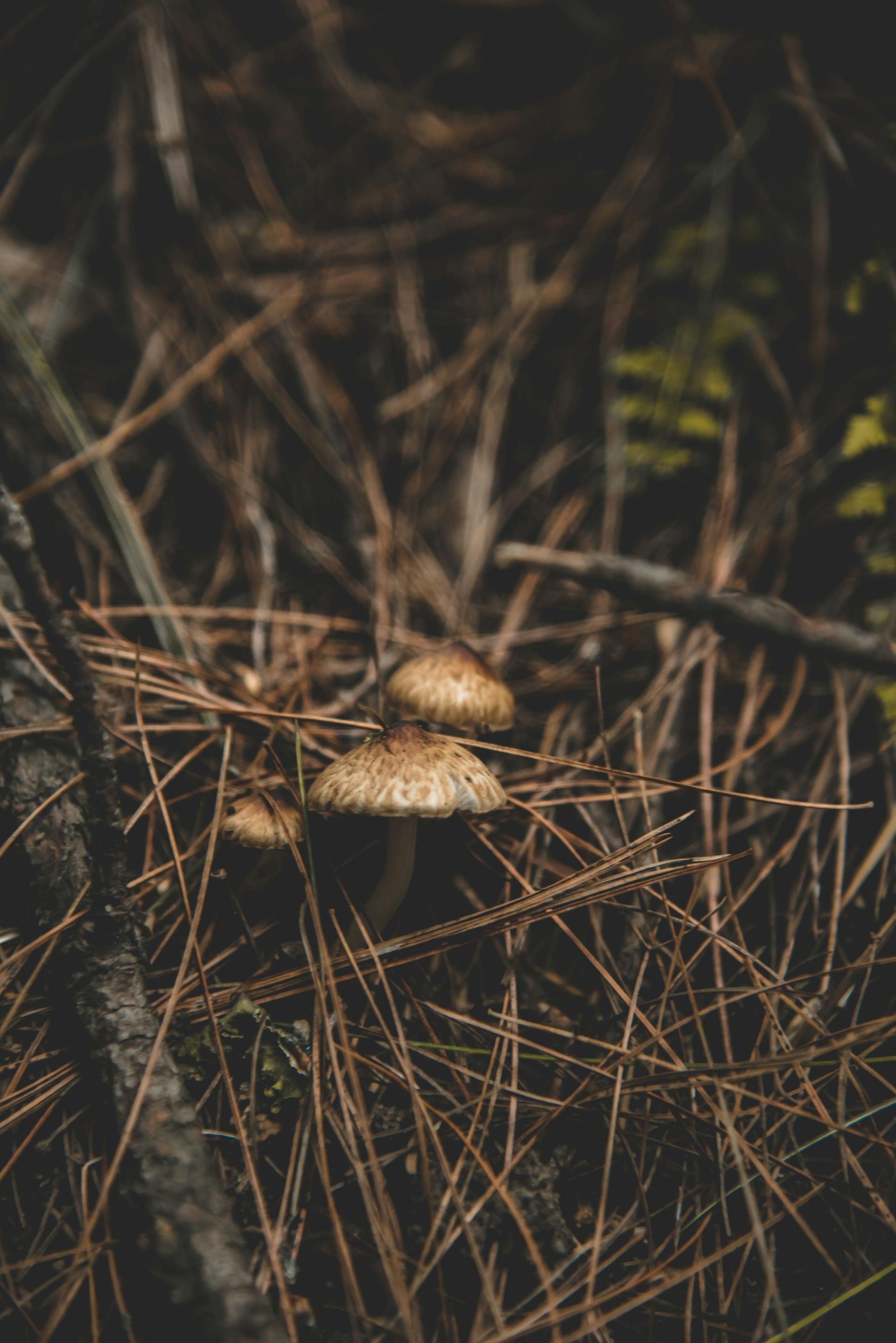
Pluteus
Pluteus Fr.
The genus Pluteus contains more than three hundred species of wood-decay mushrooms found across the world’s forests. The genus is characterized by free gills — gills that do not attach to the stem — and a pink spore print, both distinguishing features within the broader agaric fungi.
Most Pluteus species are non-psychoactive and play important ecological roles as decomposers of dead wood, particularly hardwood. A small subset of species, however, produces psilocybin and psilocin alongside related alkaloids. The most documented psilocybin-producing species is Pluteus salicinus, originally described from European willow stumps but now known from a broader range.
Other species in the genus with documented psilocybin content include P. glaucus, P. cyanopus, and P. nigroviridis. These species are relatively uncommon and tend to fruit infrequently.
Like other psilocybin-producing genera, the active Pluteus species show blue bruising on damaged tissue. Their relatively small fruiting bodies and association with deadwood substrates make them less commonly encountered than the dung-dwelling species of Psilocybe and Panaeolus.