Panaeolus
Panaeolus (Fr.) Quél.
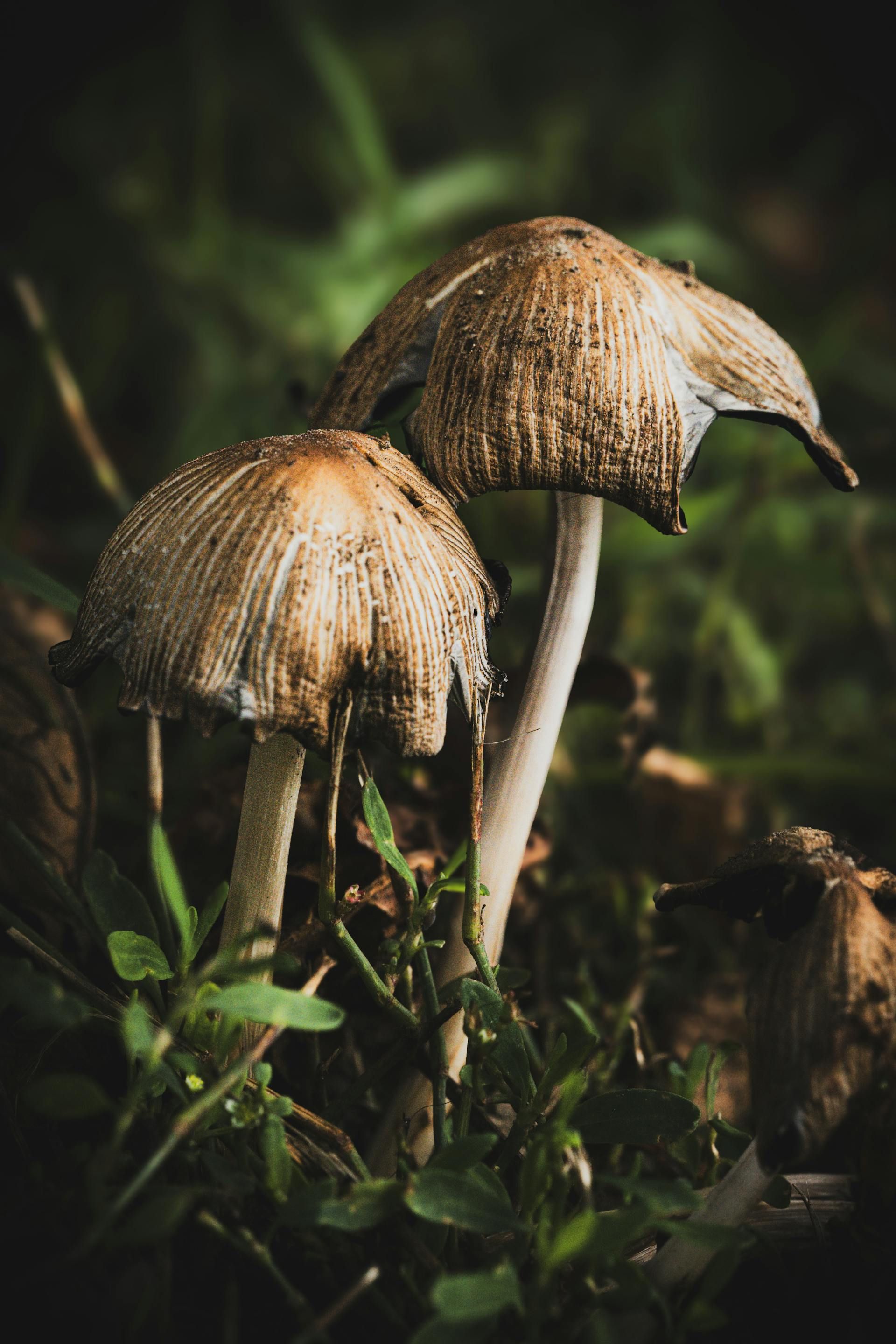
The genus Panaeolus — sometimes called “mottlegills” or “weed panaeoli” — comprises about fifty species of small, dung-loving mushrooms with distinctively dark, mottled gills. Most species are saprotrophs that fruit on the dung of large herbivores or in manured pastures.
Only a minority of Panaeolus species produce psilocybin in significant concentrations. The most notable are Panaeolus cyanescens (also marketed under the older synonym Copelandia cyanescens) and Panaeolus cinctulus, both of which have documented psilocybin and psilocin content comparable to potent Psilocybe species.
Panaeoli that produce indole alkaloids share the blue-bruising character with potent Psilocybe species — the same visible oxidation of psilocin on damaged tissue. The spore print, however, differs: Panaeolus spore prints are jet black to dark purple-black, rather than the dark purple-brown typical of Psilocybe.
The genus is ecologically and taxonomically distinct from Psilocybe despite the shared psilocybin chemistry. Their convergent production of the same alkaloids is one of the more interesting evolutionary puzzles in fungal biochemistry.