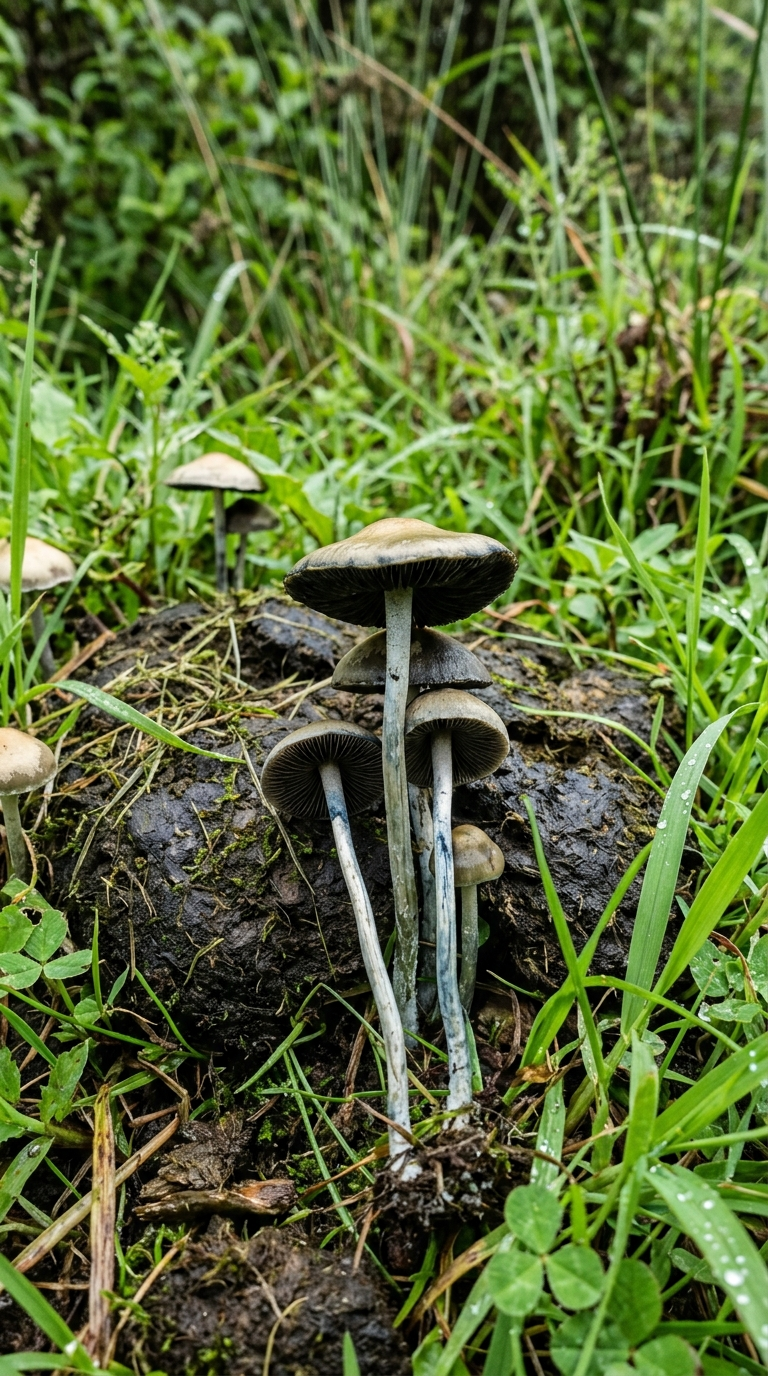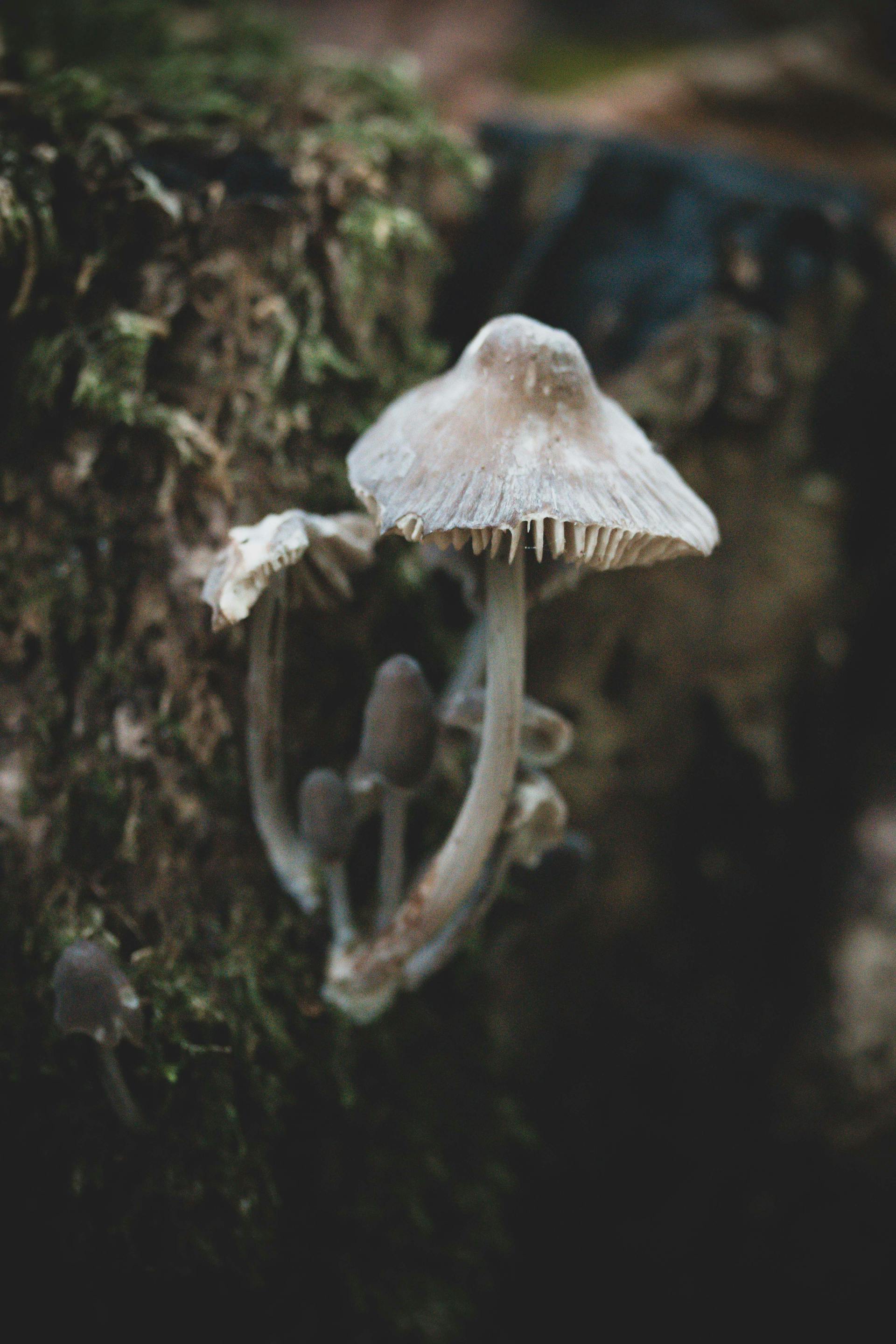
The story of how psilocybin mushrooms became known to the world is really the story of one man, R. Gordon Wasson and his trip to Oaxaca. In June 1955 R. Gordon Wasson, who was not a researcher but someone who liked to learn about plants and their uses and who also worked as a vice president at the bank J. P. Morgan became the first person from outside the community to take part in a Mazatec mushroom ceremony. What happened that night and everything that came after it changed the course of psilocybin history. If you look at any part of the modern psychedelic story, like the clinical trials the counterculture, the pharmaceutical companies, the retreats you will find that it all started with R. Gordon Wasson, a banker in a dark room in a mountain town.
The story is not as simple as it is often told, where a curious Westerner discovers a secret and shares it with the world. That version is neat and flattering. It is not complete. The real story involves a lot of research done patiently over many years. It involves a magazine article that quietly changed the course of an indigenous tradition.. It involves consequences for the people whose ceremony R. Gordon Wasson documented consequences that he did not foresee. It is worth telling the story with all these things in mind because the simple version leaves out the part that matters most the part where other people paid for R. Gordon Wassons discovery.
Before R. Gordon Wasson what the West knew
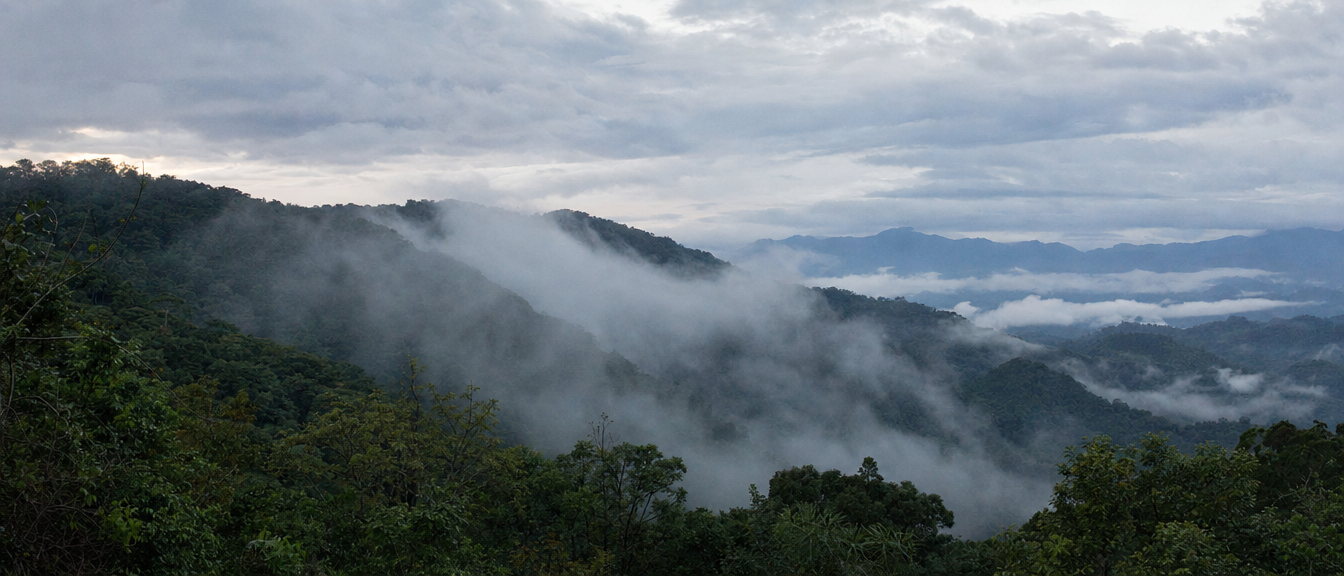
By the middle of the century almost nothing was known in the West about Mesoamerican mushroom use. There were a fragments, scattered and half-buried. Sixteenth-century Spanish writers had recorded the existence of teonanacatl a word that means the flesh of the gods mushrooms that the Aztecs used in contexts.. Writing about something is not the same as preserving it. The Spanish suppressed the practice as part of a campaign of religious persecution treating it as idolatry to be stamped out rather than a tradition to be understood. By the time researchers in the twentieth century became interested again most of them thought the whole tradition had been lost, a relic of the pre-conquest past with nothing left of it but a few lines in old colonial texts.
They were wrong. A series of reports starting in the 1930s began to suggest that the tradition was still alive. Robert Weitlaner, a Mexican engineer with a serious interest in research witnessed mushroom use in Oaxaca in 1936. The Harvard researcher Richard Evans Schultes, who would become one of the important figures in the study of plants and their uses traveled to the region in 1938 and identified some of the species being used. These were observations by capable people and they pointed clearly to a living tradition rather than a dead one.. They stayed largely within specialist circles. They were published in papers and letters between scholars and went no further. The knowledge existed it just had not reached the world.
That detail is worth pausing on because it changes the way we think about the word rediscovery. The tradition was never lost to the people who practiced it. It was never even genuinely lost to researchers not after the 1930s. What R. Gordon Wasson did was not uncover a secret that nobody knew. It was something specific and as it turned out far more consequential. He took knowledge that had been sitting quietly inside a circle of specialists and a living indigenous community and he shared it with an audience of millions in a way that none of his predecessors had attempted or perhaps imagined.
It also changes how we think about the writers and researchers who came before R. Gordon Wasson. The century Spanish accounts were not neutral records. They were written by people working to extinguish the practice they described and their interest in teonanacatl was the interest of someone trying to eliminate a heresy, not a researcher preserving a culture. So when later researchers assumed the tradition had died they were partly reading the success of that suppression into the silence that followed it. The Mazatec people had not stopped their practices they had simply continued out of sight in their language in their own mountains with no particular reason to advertise a practice that outsiders had spent centuries trying to destroy. The quiet was not absence it was discretion, earned and entirely rational and it is worth remembering that the very invisibility R. Gordon Wasson would later reveal had been a form of protection.
The Wassons project
R. Gordon Wasson and his wife Valentina a pediatrician of origin had built up over many years a deep and unusual interest in the cultural history of mushrooms a subject they called ethnomycology. The whole thing started in a domestic way. The interest was driven in part by Valentinas observation that Russians and other Slavic peoples seemed to relate to mushrooms in a markedly different way than English-speakers did. Where the English-speaking world leaned toward a fear of mushrooms a sense that they were faintly sinister Slavic cultures had an affectionate engagement with fungi gathering them prizing them weaving them into food and folklore. The couple noticed the gap. Could not stop thinking about it.
So they pursued it. The Wassons spent years investigating this divide, reading, collecting, corresponding and somewhere in the course of all that they became aware of the Mesoamerican reports the thin trail left by Weitlaner and Schultes and a few others. It caught their attention. By the 1950s they had begun traveling to Oaxaca working through introductions and local contacts trying to make contact with people who might still practice the old ceremonies. This was not a trip or a tourists curiosity. It was the culmination of a sustained scholarly obsession that had been building for the better part of two decades.. That matters for how we judge what came next because the consequences are so much harder to weigh when the intentions behind them were sincere. A careless dilettante stumbling into harm is a story. A serious devoted researcher doing work that nonetheless causes harm is a much more uncomfortable one and it is the true one.
The velada with Maria Sabina
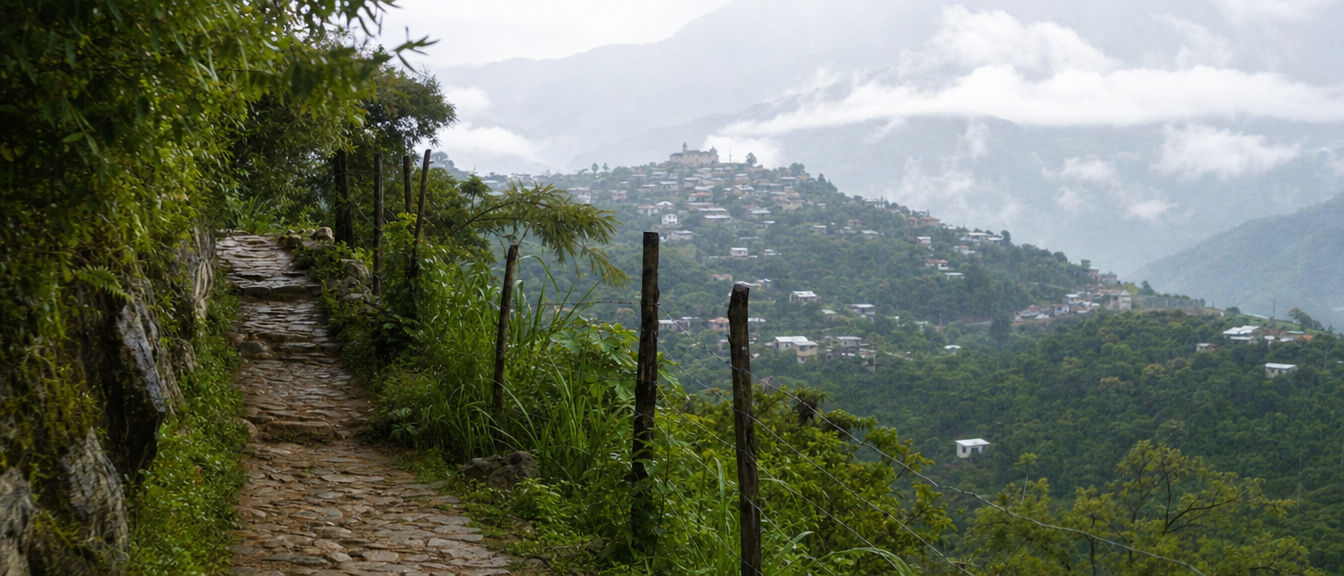
In June 1955 R. Gordon Wasson and his colleague, the photographer Allan Richardson were in the Mazatec town of Huautla de Jimenez in the Sierra Mazateca of Oaxaca. Through contacts they were eventually introduced to Maria Sabina, a traditional healer, who held all-night healing ceremonies called veladas in which she and the participants consumed mushrooms as part of a long ritual of chant and prayer.
On the night of June 29 to 30 1955 Sabina conducted a velada in which she allowed R. Gordon Wasson and Richardson to take the mushrooms alongside her. The ceremony unfolded in her home in the dark carried forward by her songs and her prayers across the hours of the night. R. Gordon Wasson would later describe the experience as among the profound of his entire life and there is little reason to doubt that he meant it. He believed he was the outsider, at least in modern times to have taken part in such a ceremony as a full participant rather than a passive observer standing at the edge of the room. To him it felt like crossing a threshold no Westerner had crossed.
What Maria Sabina understood about her guests that night is much harder to recover. It matters to the story. By her later accounts and those of others she had been led to believe these foreigners came to her because they needed help in the way her own people came to her and she conducted the velada in that spirit as a healing offered in good faith. She was not staging a demonstration for visiting researchers. She was doing her work for people she had been told required it. The gap between what the ceremony meant to her and what it meant to R. Gordon Wasson, the banker writing it down is one of the tragedies underneath the louder ones because the two people in that room were, in a sense not in the same room at all.
Whether R. Gordon Wasson was really the first is genuinely debatable. Other Westerners had certainly observed mushroom use before him and the question of who participated as opposed to who merely watched turns entirely on how you define the line between the two. It is the kind of claim that dissolves the harder you press on it.. The argument over priority interesting as it is to historians is almost beside the point. What is not debatable is what R. Gordon Wasson did next. That is the hinge on which the entire story turns.
"Seeking the Magic Mushroom"
In May 1957 Life magazine published R. Gordon Wassons first-person account of the Huautla velada under the title "Seeking the Magic Mushroom." Illustrated with Richardsons photographs it ran across seventeen pages. Landed in front of a mass American audience at a moment when Life sat near the center of the countrys attention. By the standards of -century journalism it was an extraordinary piece of writing. It was vivid it was respectful in tone. It kept its focus on the spiritual dimensions of the experience rather than reaching for sensation. For most of the people who read it this was the first they had ever heard that such a thing existed anywhere in the world. The phrase magic mushroom itself which now feels almost too familiar to notice got its real circulation, in English right there on those pages.
The article did something that Sabina and her community never expected. It made Huautla a popular place to visit. This happened because the article was about the mushrooms that grow there. Many foreigners started coming to the village to try these mushrooms. They had read about them in the article. Were curious.
The number of visitors kept increasing over the years. Famous people like Bob Dylan, John Lennon and Mick Jagger were said to have visited Huautla. Even if some of these stories are not true it is a fact that many people came to the village.
For Sabina and the people in her community the consequences were very bad. The ceremony that Sabina practiced was not meant for tourists. It was a way of healing that was connected to their culture and religion. The ceremony was not a show. A way to help people. When many outsiders came they did not understand the ceremony. Did not respect it. This disrupted the practice. Caused problems for Sabina.
She was arrested by the authorities. Her house was even burned down by some people in her community. They blamed her for the problems that the outsiders had caused. Sabina lived the rest of her life in poverty. She became famous to strangers. Some people in her community were upset with her.
Sabina told visitors that after the foreigners came the mushrooms had lost their power. This is not because the mushrooms themselves had changed. It was because the context in which they were used had changed. The mushrooms were used in a ceremony with prayers and a specific purpose. When outsiders used them for fun the ceremony lost its meaning.
The thing that made the mushrooms special was not their chemical properties but the way they were used. The power of the mushrooms was connected to the relationship between the healer and the patient. When this relationship was disrupted the power of the mushrooms was lost.
The phrase that Sabina used has become well known in discussions about appropriation and psychedelics. It has been quoted in books and documentaries by people who never met her. This is ironic because even her sadness about being famous has become famous.
Wassons legacy
Wasson did not stop writing after the article in Life magazine. He continued to study the history of psychoactive mushrooms and other plants. He also helped Western researchers learn about the chemistry and pharmacology of these substances.
Wasson gave samples of the mushrooms to a chemist named Albert Hofmann. Hofmann was able to isolate the compound in the mushrooms, which is called psilocybin. This discovery led to research on the compound and its potential uses.
The chain of events that started with Wassons article is remarkable. A banker travels to a mountain town writes an article about the mushrooms he finds there. This leads to a whole field of research. The research on psilocybin has continued to this day. Has led to its potential use as a treatment for depression and other conditions.
Wassons contributions to the field of ethnomycology were significant. He treated attitudes toward fungi as a serious subject of study. His work was influential. Has continued to be important even after his death.
However Wassons role in disrupting the tradition of the people is also part of his legacy. He regretted the consequences of his article. Wished he had handled things differently.. Regret cannot undo the damage that was done.
What this history asks of us
The story of Wasson and the Mazatec people raises questions about how to engage with traditions that originated outside the West. How can we learn from these traditions without distorting or destroying them?
This is not a question and it does not have an easy answer. The honest assessment of Wassons work is that it contributed to the disruption of a practice. His intentions were good. The outcomes were bad.
We must learn to hold both of these things and not collapse into either hero-worship or easy condemnation. The lessons of this story are still relevant today for anyone working at the intersection of knowledge and outside research interest.
There is a temptation to extract knowledge from cultures and share it without permission. This temptation is still alive today. The story of Wasson and the Mazatec people shows us the importance of being mindful of this temptation and respecting the traditions of cultures.
The thing that Wasson wanted to do was to honor the tradition he had experienced.. It was precisely this act of honoring it in public that led to the problems. This is not a reason to stay silent about peoples traditions but it is a reason to think carefully about who bears the cost when an outsider decides to share something that is private.